Remote Patient Monitoring Software Development

Binariks builds custom RPM software for healthcare providers, digital health startups, and MedTech companies that need connected devices, EHR integration, real-time alerts, analytics, and secure patient monitoring workflows.

Get a Consultation

What is RPM software development?

Remote patient monitoring software development is the process of building platforms that collect patient health data from connected devices, transmit it securely, and display it to care teams through dashboards, alerts, analytics, and EHR-connected workflows. It supports chronic care, post-acute monitoring, preventive interventions, and home-based patient management.
Custom RPM Platform Development

We design and build RPM platforms from the ground up, tailored to your clinical workflows and patient population. Whether you're monitoring blood pressure, glucose, cardiac rhythms, or pulmonary function, we deliver scalable architecture built for real-time data throughput and long-term extensibility.

IoT & Wearable Device Integration

Our engineers connect FDA-approved medical devices, consumer wearables (Apple Watch, Fitbit, Samsung), and specialised sensors (such as glucose monitors, ECG patches, pulse oximeters, and connected scales) into a unified data stream. We handle Bluetooth, Wi-Fi, and LTE protocols alike with the same level of precision.

EHR/EMR Integration

We integrate RPM systems directly with your existing EHR and EMR infrastructure using HL7 FHIR standards, giving care teams instant access to patient monitoring data within their established workflows. You get secure, bidirectional data exchange without parallel charting and missed context.

RPM Data Analytics and Reporting

We build the analytics layer that turns continuous patient data into actionable clinical insights. We create monitoring dashboards and reporting tools for both clinicians and operations teams. Custom reporting modules can be aligned to CMS RPM billing requirements (CPT codes 99453, 99454, 99457).

Telehealth & RPM Platform Integration

We connect your RPM system with telehealth infrastructure to enable seamless virtual consultations triggered by monitoring alerts. Patients get secure video visits, and clinicians get full context before the call begins.

Cloud Infrastructure & Scalable Data Storage

We architect RPM solutions on AWS, Azure, or GCP with scalable storage designed for continuous data ingestion from hundreds of concurrent devices. Your infrastructure grows with your patient base without performance degradation or compliance issues.

Legacy RPM System Modernization

Running an outdated monitoring system that can't scale or integrate? We audit your existing architecture and migrate to a modern, cloud-native stack, preserving your data and aligning your platform with current regulatory standards with no downtime.

The Impact of Remote Patient Monitoring

See why healthcare teams invest in RPM platforms that connect patient data, care teams, and timely interventions.

Key RPM Software Capabilities

Modern RPM software is only as strong as the features powering it. Here's what we engineer into every solution we build, tailored to the specific needs of your organisation:

Why Clients Trust Us

Insights into our team achievements and valued partnerships

Deliverables We Provide

Binariks structures RPM development around product workflows, device data, clinical integrations, and secure production delivery.

Your RPM use case doesn't fit the mold?

We've helped companies build and grow their RPM solutions ??? let's chat.

Book a consultation

How We Build RPM Software

Binariks moves from workflow discovery to secure deployment with clear outputs at every stage.

Step 01

Discovery & Requirements

Mapping care programs, patient groups, devices, workflows, integrations, and regulatory expectations.

Outcome: Scope, requirements, workflow map, and delivery roadmap. 

Step 02

Architecture & Compliance Design

We define cloud architecture, data flows, access rules, security controls, and integration approaches.

Outcome: Architecture plan, compliance considerations, and technical specification.

Step 03

UX/UI Prototyping

We produce interactive prototypes for both the clinician dashboard and patient-facing interfaces, validated against usability standards.

Outcome: Wireframes, clickable prototypes, and validated user flows.

Step 04

Development and Device Integration

We build the monitoring engine, device connections, dashboards, alerts, and patient-facing features.
Outcome: Working software increments and tested device data flows.

Step 05

Integration and Testing

We validate EHR sync, alert routing, data consistency, performance, security, and usability.

Outcome: QA reports, integration results, and release readiness notes.

Step 06

Deployment and Support

We support cloud deployment, monitoring setup, staff onboarding, and post-launch improvements.

Outcome: Production release, documentation, and support roadmap.

Compliance and Security in RPM Development

Binariks designs RPM platforms with privacy, security, interoperability, and auditability considered from the architecture stage.

Technology Stack

We choose technology based on product requirements, user roles, data sensitivity, integration needs, and long-term maintainability.

React
React Native
Flutter
iOS Swift
Kotlin
Node.js
Python
Java
.NET
FastAPI
Java Spring Boot
AWS
Azure Microsoft
Google Cloud
PostgreSQL
MySQL
MongoDB
Redis
DynamoDB
Smart FHIR
FHIR
Wi-Fi
LTE
Bluetooth LE
MQTT
Zigbee
AWS IoT Core
Azure IoT Hub
Apple HealthKit
Google Health Connect
Tensorflow
PyTorch
Scikit-learn
Pandas
NumPy
Prophet
AES-256
OAuth 2.0
RBAC
HashiCorp Vault
AWS KMS
Azure Key Vault
Docker
Kubernetes
Terraform
GitHub Actions
Jenkins
CircleCI
Datadog
PagerDuty
Grafana
Apache
Elasticsearch
Power BI
Tableau
Custom dashboards

Frontend

React
React Native
Flutter
iOS Swift
Kotlin

Backend

Node.js
Python
Java
.NET
FastAPI
Java Spring Boot

Cloud Platforms

AWS
Azure Microsoft
Google Cloud

Databases

PostgreSQL
MySQL
MongoDB
Redis
DynamoDB

Healthcare Interoperability

Smart FHIR
FHIR

Device & IoT Connectivity

Wi-Fi
LTE
Bluetooth LE
MQTT
Zigbee
AWS IoT Core
Azure IoT Hub
Apple HealthKit
Google Health Connect

AI / ML

Tensorflow
PyTorch
Scikit-learn
Pandas
NumPy
Prophet

Security & Compliance

AES-256
OAuth 2.0
RBAC
HashiCorp Vault
AWS KMS
Azure Key Vault

DevOps

Docker
Kubernetes
Terraform
GitHub Actions
Jenkins
CircleCI
Datadog
PagerDuty

Analytics & Reporting

Grafana
Apache
Elasticsearch
Power BI
Tableau
Custom dashboards

RPM Software Built for Real Care Programs

Remote patient monitoring reduces hospital readmissions, provides clinicians with earlier warning of deteriorating conditions, and extends quality care to patients with chronic illness at home. Built right, it becomes one of the most defensible investments a healthcare organization can make.

Binariks brings healthcare domain knowledge, compliance expertise, and engineering depth to ensure yours is.

  • RPM platform built for your devices, patients, and care model

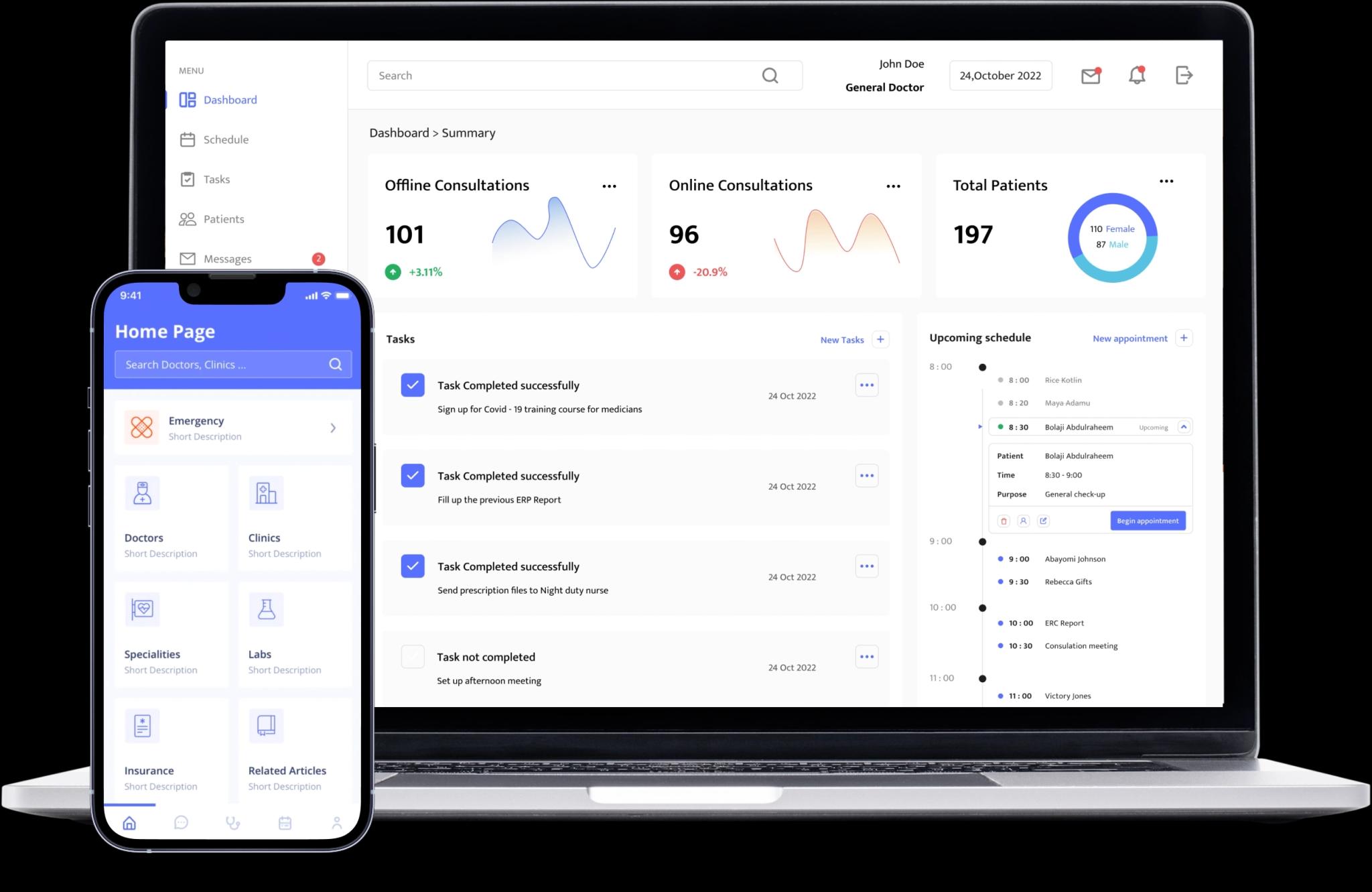
  • Clinician dashboards for alerts, trends, reporting, and patient review

  • Patient app for device setup, reminders, measurements, and messaging

  • Architecture ready for EHR, telehealth, billing, and analytics integrations

  • Security foundations for PHI, access control, audit logs, and cloud delivery

  • Support from discovery through launch, scaling, and future optimization

Other Services We Provide

Explore more ways to build secure, connected healthcare software with Binariks.

FAQ

What is remote patient monitoring software, and how does it work?

Remote patient monitoring (RPM) software collects patient health data, such as vitals, glucose levels, heart rhythms, weight, and more, from connected devices and wearables outside a clinical setting. That data is transmitted securely to a cloud platform where it's stored, analyzed, and surfaced to care teams through a real-time dashboard. Clinicians can set alert thresholds, review trends, and intervene when readings indicate a potential problem without the patient needing to visit a clinic. Custom RPM software integrates this monitoring layer with EHR systems, billing platforms, and telehealth tools to create a connected, end-to-end care experience.

What compliance standards does RPM software need to meet?

RPM software handling US patient data must comply with HIPAA, which governs the storage, transmission, and access of protected health information (PHI). This typically requires end-to-end encryption, audit logging, role-based access controls, and a Business Associate Agreement (BAA) with your technology vendor. For European patients, GDPR applies. If your RPM solution incorporates algorithms that influence clinical decisions, FDA SaMD (Software as a Medical Device) guidelines may also apply. Binariks builds to HIPAA, HITECH, GDPR, HL7 FHIR, and FDA standards, and holds ISO 9001:2015 and ISO/IEC 27001:2013 certifications.

Can RPM software integrate with our existing EHR system?

Yes. EHR integration is a core capability in every RPM platform we build. We use HL7 FHIR R4 standards to enable bidirectional data exchange with major EHR systems including Epic, Cerner, Athenahealth, and others. Patient monitoring data flows directly into the clinical record, and demographic or prescription updates in the EHR are reflected in the RPM platform . This eliminates double-entry and keeps both systems in sync.

What CPT codes apply to remote patient monitoring, and can the software support billing?

The primary CMS CPT codes for RPM are:

  • 99453 — initial device setup and patient education on use (~$25 average reimbursement)

  • 99454 — device supply and daily data transmission, billed per 30-day period (~$80)

  • 99457 — first 20 minutes of RPM treatment management per month, requires live interactive communication with the patient

  • 99458 — each additional 20 minutes per month (~$60)

  • 98975 — initial setup for remote therapeutic monitoring (RTM) and patient education

  • 98976 — 30-day device supply for respiratory system monitoring under RTM

We build billing support modules that automatically track qualifying patient interactions, log monitoring minutes, and generate the documentation needed to support reimbursement submissions. They cover both RPM and RTM billing pathways.

Which conditions and devices are supported by RPM software?

RPM software can support monitoring across a wide range of chronic conditions — hypertension, diabetes, COPD, cardiac disease, congestive heart failure, obesity management, and mental health, among others. Device support depends on the build, but typically includes FDA-approved medical devices (blood pressure cuffs, continuous glucose monitors, pulse oximeters, ECG patches, connected scales) and consumer wearables (Apple Watch, Fitbit, Samsung Galaxy Watch). We scope device integrations based on your patient population and clinical priorities.

How does AI improve remote patient monitoring?

AI and machine learning add predictive capability to RPM systems that rule-based alerting alone can't provide. ML models trained on patient data can identify early deterioration patterns , such as a gradual blood pressure trend, subtle changes in heart rate variability, or declining SpO2 levels before they trigger threshold alerts. This supports earlier clinical intervention, more personalized care protocols, and reduced emergency readmissions. We build AI analytics layers using TensorFlow and Python-based data science tooling, integrated directly into the RPM dashboard.

How long does it take to build custom RPM software, and what does it cost?

Development timelines depend on scope: a focused RPM solution with core monitoring, alerting, and EHR integration typically requires 4–6 months from discovery to launch. More complex platforms with AI analytics, multi-device ecosystems, and billing modules may take 8–12 months. Cost ranges from approximately $100,000 for an MVP build to $300,000+ for a full-featured enterprise platform. Binariks provides real-time cost estimates based on your specific requirements during the discovery phase.

Healthcare Insights from Our Experts

Let's Start Your Project

We'd love to hear about the project you're working on. Simply complete the form and we'll be in touch.

What happens next?

01

Our expert will reach out to understand your goals and challenges

02

If needed, we'll sign an NDA to ensure full confidentiality

03

You'll receive a tailored roadmap with solution suggestions, timelines, and budget estimates