EMR & EHR Software Development Services

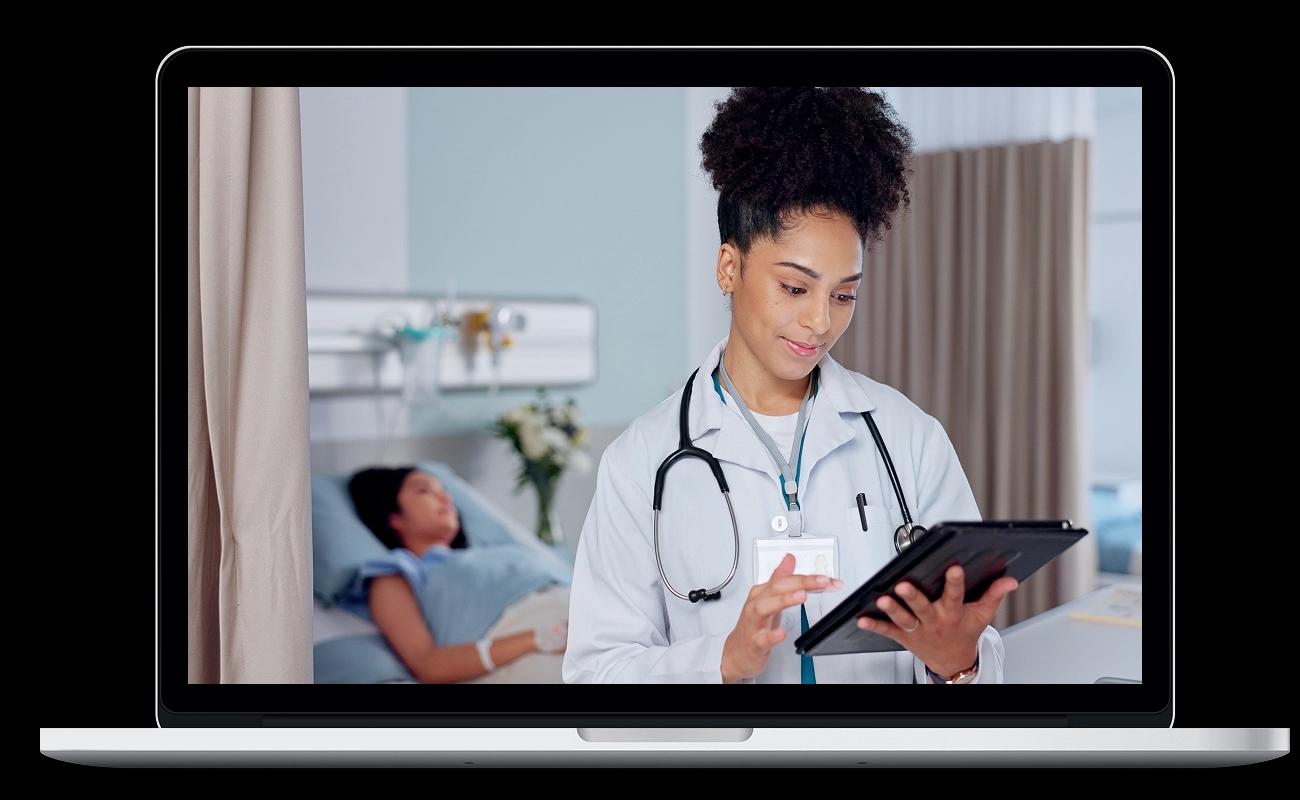
We build systems that work the way your team actually works. From greenfield builds to legacy re-engineering, FHIR-compliant integrations, and AI-powered clinical workflows, our EHR and EMR software development company delivers HIPAA-compliant solutions with deep healthcare domain expertise.

Get a Consultation

What is EHR/EMR software development?

EHR/EMR software development is the process of designing, building, modernizing, and implementing digital medical record systems. It covers clinical documentation, patient charts, scheduling, billing workflows, practitioner UX, AI-assisted features, data migration, security controls, QA, and go-live support for hospitals, clinics, digital health companies, and EHR vendors.
Full-Cycle EHR & EMR Software Development

End-to-end custom EHR/EMR development from architecture and UX to deployment for mobile and desktop. HIPAA and GDPR compliance is built in from day one. We can work alongside your in-house team or as a standalone delivery unit and assign teams aligned with your tech stack and project scope.

Legacy EHR Re-engineering & Scaling

We modernise ageing EMR systems incrementally while preserving business continuity. Our specialists replace brittle architecture, reduce technical debt, and enable cloud migration. We can work alongside your existing team that manages legacy architecture.

AI EHR Development Services

Add AI-driven capabilities to your EHR: predictive risk stratification, clinical decision support, automated documentation, voice-to-chart dictation, and NLP-powered data extraction.

EHR UI/UX Design Services

Our rule is practitioner-centred interface design built to reduce cognitive load by cutting time spent on documentation. We design mobile, tablet, and desktop experiences for clinical, billing, and administrative roles alike.

EHR Feature Expansion

Add new functionality to your EHR without disrupting existing workflows. We build features that integrate cleanly with your current system.

What Pushes Healthcare Teams to Replace Their EHR

EHR replacement rarely starts with one missing feature. It starts when daily clinical work becomes slower, costlier, and harder to control.

Why Clients Trust Us

Insights into our team achievements and valued partnerships

Who We Build EHR/EMR Software For

Hospitals & Health Systems

Modernize legacy EHR/EMR infrastructure for high-volume clinical environments
Improve documentation, scheduling, billing, and administrative workflows
Build multi-role systems for clinicians, nurses, admins, and department teams
Support phased implementation without disrupting active healthcare operations

Private Practices & Clinics

Build lean, specialty-specific EMR systems without unnecessary platform bloat
Adapt workflows for primary care, pediatrics, dermatology, OB/GYN, psychiatry, and other specialties
Improve charting, appointment management, patient communication, and billing workflows
Reduce dependency on rigid off-the-shelf EHR subscriptions

Digital Health Startups

Build EHR/EMR MVPs with scalable, production-ready architecture
Add clinical documentation, patient records, provider workflows, and admin tools
Prepare the product for healthcare buyers, pilots, and compliance reviews
Design architecture that can later support integrations, AI features, and growth

Enterprise Healthcare & Payers

Build EHR-connected platforms for multi-facility or multi-stakeholder environments
Support population health, reporting, member services, and operational data workflows
Improve data visibility across internal teams, providers, vendors, and partner systems
Modernize complex healthcare software without replacing everything at once

Specialty Care Organizations

Build EHR/EMR workflows for cardiology, oncology, neurology, orthopedics, urgent care, and long-term care
Add specialty templates, structured documentation, care plans, and clinical data views
Support telehealth, patient portals, diagnostic data, and remote care workflows where needed
Create software around how specialists actually document, review, and manage care

Stop adapting your care to your software

HIPAA- and FHIR-compliant EHR/EMR development — from legacy modernization to AI-powered builds.

Talk to Our EHR Team

Deliverables we provide

Every EHR/EMR engagement is scoped around your product phase, clinical workflows, user roles, and implementation goals.

Regulatory & Standards Alignment

Binariks builds EHR/EMR software with privacy, security, interoperability, and auditability considered from the architecture stage.

Ready to Build EHR Software That Actually Fits?

Talk to our healthcare software team about your EHR or EMR project. We'll scope it honestly, tell you what's realistic, and put together a team that can deliver it.

EHR Development & Implementation Process

Binariks follows a structured delivery process built around clinical workflows, usability, compliance expectations, and production readiness.

Technology Stack

We select the tech stack based on your clinical and compliance requirements. They have to fit your project, not just be convenient to our EHR developers. Here is our stack:

Backend

.NET Core
C#
Node.js
Ruby on Rails
Java Spring Boot
PHP

Frontend

React
Angular

Containerization

Docker

Cloud Computing

AWS
Azure Microsoft
Google Cloud
Oracle Cloud Infrastructure

Platforms

Microsoft Cloud for Healthcare
Salesforce
Odoo

Databases

SQL
PostgreSQL
DynamoDB
MongoDB
Redis

Database-Related

SSIS (Microsoft SQL Server Integration Services)

EHR/EMR Software Built Around Clinical Reality

Binariks helps turn complex healthcare workflows into secure, usable EHR/EMR software your teams can actually adopt. The result is a system built around clinical work, administrative needs, data protection, usability, and long-term product evolution.

  • Custom record system shaped around clinical, admin, billing, and patient workflows

  • Architecture prepared for scaling, modernization, AI features, and future integrations

  • Interfaces designed to reduce documentation friction and role switching
  • Compliance-aware engineering for PHI, access control, audit logs, and security

  • QA, implementation, migration, and go-live support for production readiness

  • Long-term delivery support for stabilization, expansion, and continuous improvement

Other Services We Provide

Explore more ways to build secure, connected healthcare software with Binariks.

FAQ

What is EMR software?

Electronic Medical Records software is a digital version of a patient's chart within a single practice. They cover visit history, diagnoses, medications, and treatment plans for use by one provider or clinic.

What is the difference between EMR and EHR?

MR is practice-specific; EHR is designed to travel with the patient across providers, facilities, and care settings. EHR systems are broader, interoperable, and built for health information exchange.

What are the most popular EHR platforms?

Epic, Oracle Health (Cerner), athenahealth, eClinicalWorks, and Meditech are among the most widely used. Epic alone holds over 35% of the US hospital market.

How do you create custom EMR/EHR software?

Building custom EHR software starts with discovery: mapping your clinical workflows, identifying your compliance requirements, and defining your integration touchpoints. From there, we design the system architecture, data models, and FHIR API layer before writing any code. Development runs in agile sprints with continuous clinical stakeholder review. The finished system reflects how care is actually delivered, not how someone imagined it during a requirements session six months earlier. The full process typically spans discovery, architecture, build, QA, and a phased go-live with post-launch support.

How much does custom EHR/EMR software development cost?

Custom EHR software development costs vary significantly based on scope, complexity, number of integrations, and your existing infrastructure. A focused MVP for a speciality clinic may start in the $150,000–$300,000 range, while a full enterprise EMR platform with multi-system integrations, AI features, and multi-facility deployment can run $500,000 and above. We provide fixed-scope quotes for defined projects and offer transparent time-and-materials engagement for evolving projects. The discovery phase is scoped as a separate, fixed deliverable to provide cost clarity before committing to the full build.

Do you provide EHR/EMR integration with existing hospital systems?

Yes, EHR integration engineering is one of our core specializations. We work across HL7 v2/v3, FHIR R4, C-CDA, DICOM, X12 EDI, and proprietary vendor APIs. Whether you need to connect an existing EHR to a lab system, a payer clearinghouse, an RPM device network, or a pharmacy platform, we scope and deliver the integration layer. We also handle legacy system integration scenarios where the source system doesn't support modern standards, using middleware such as Mirth Connect to bridge the gap.

Are your EHR software solutions HIPAA and FHIR compliant?

Yes. HIPAA compliance and FHIR R4 alignment are design requirements, not post-build add-ons. Every EHR system we develop is built on HIPAA-eligible cloud infrastructure (AWS or Azure), with PHI encryption at rest and in transit, role-based access controls, full audit logging, and Business Associate Agreements in place. Our FHIR API implementations meet the ONC §170.315 criteria and support the data access and portability requirements of the CMS Interoperability and Patient Access Final Rule.

Can you develop a mobile app for an existing EHR system?

Yes. We build SMART on FHIR-compliant mobile applications that connect to existing EHR systems via their FHIR APIs. This includes Epic MyChart, Cerner, a custom EHR, or any FHIR-enabled system. We develop in React Native and Flutter for cross-platform delivery, and we can also build specialty mobile companions for practitioners (clinical documentation, e-prescribing, remote order entry) or patient-facing portals for appointment management, messaging, and care plan access.

How do you implement AI in EHR software development?

AI EHR development covers a range of capabilities: NLP for automated clinical note generation and chart summarization, predictive models for patient risk stratification and readmission likelihood, clinical decision support alerts, AI-driven diagnostic imaging analysis, and voice-to-chart dictation workflows. We integrate with AI Health Insights APIs (Azure, AWS) as well as building custom ML pipelines on your clinical data where needed. All AI features are implemented with appropriate clinical oversight mechanisms, model validation, and explainability requirements. We don't ship black-box AI into clinical workflows.

How long does EHR software implementation usually take?

Timeline depends on scope. A focused EHR module or integration engagement may complete in 3–5 months. A greenfield EHR build for a specialty practice typically runs 6–10 months from discovery to go-live. Enterprise EMR platforms with extensive multi-system integration, AI features, and multi-facility rollout can take 12–24 months across phased delivery. We always structure delivery in phases with functional milestones so you can test and validate working software throughout the process, not wait for a big reveal at the end.

Will I have full control over your EHR developers?

At Binariks, we collaborate with clients through a dedicated team model. It predicts full involvement and dedication of the EHR software developers to the client’s project. The project manager facilitates communication between the client and the team. The client can participate in sync-up meetings and the day-to-day life of the development team.

Let's Start Your Project

We'd love to hear about the project you're working on. Simply complete the form and we'll be in touch.

What happens next?

01

Our expert will reach out to understand your goals and challenges

02

If needed, we'll sign an NDA to ensure full confidentiality

03

You'll receive a tailored roadmap with solution suggestions, timelines, and budget estimates