

AI has moved past the buzz. In 2026, it's about solving problems, not just exploring possibilities. From logistics to healthcare to fintech, companies are racing to turn their data into more thoughtful decisions, faster operations, and real results. To do that, more teams are partnering with the top AI consulting firms for hands-on support that turns ideas into working systems.
But the search for the right partner can be frustrating. The market is full of big claims, overused terms, and brands that look good on paper but can't deliver in production. What separates the best from the rest? Technical depth, real-world experience, and the ability to build solutions that move the numbers – not just impress in a demo.
This guide compares the most trusted AI consulting companies in 2026, looking at their case studies, industries, and tech stacks, so you can make an informed choice based on what actually matters. We also cover what to look for, what red flags to watch out for, and how to match your situation to the right type of partner.
Here's what you'll find in this guide:
- Which AI consulting firms are delivering measurable business value in 2026
- A buyer's guide: when you need AI consulting, what to look for, and red flags to avoid
- A comparison table across 10 firms
Buyer's guide: How to choose the right AI consulting partner
Before evaluating specific firms, it helps to be clear about what kind of help you actually need. The firms on this list are not interchangeable – and choosing based on brand recognition or proposal quality alone is one of the most common mistakes in AI procurement.
When do you actually need AI consulting?
Not every AI initiative requires an external consulting partner. But there are clear situations where bringing one in dramatically increases the odds of success:
- You've identified AI as a priority but don't have internal clarity on where to start or what "success" looks like
- Your team has begun experimenting with AI tools, but results are fragmented and there's no shared strategy
- You've run a PoC that worked in isolation but can't seem to get it into production
- You're operating in a regulated industry (healthcare, fintech, insurance) and need compliance built into the architecture
- You want to move fast, but your internal team doesn't have the ML engineering depth to do it without risk
If none of these apply, if you have a clear use case, strong internal data science capability, and an existing delivery framework, you may not need full consulting engagement. You might need a specialized engineering partner instead.
From PoC to production: avoiding stalled pilots
The most common failure mode in enterprise AI is not a bad model but a good model that never reaches production. According to Gartner, only about 54% of AI projects make it from pilot to deployment. The reasons are consistent: unclear ownership, underestimated integration complexity, and a gap between what the consulting team built and what the internal team can maintain.
When evaluating firms, ask specifically: what is your process for moving from PoC to production? What does handoff look like? Who is responsible for the system 6 months after launch? Firms that struggle to answer these questions concretely are advisory-focused, which is fine if that's what you need, but not if you're expecting working software.
Data, security & compliance readiness
In regulated industries, the compliance architecture needs to be part of the design from day one. The EU AI Act (fully applicable from August 2026) introduces mandatory conformity assessments, technical documentation, and human oversight requirements for high-risk AI applications in healthcare, financial services, and critical infrastructure.
For US-based organizations or those serving US markets, HIPAA , SOC 2, and sector-specific AI regulations apply depending on the domain. Ask any prospective consulting partner to describe specifically how they handle data governance, model auditability, and compliance documentation. Vague answers here are a red flag.
Enablement and training: what happens after handoff
Sustainable AI adoption depends on people as much as technology. A consulting engagement that ends with a deployed model but no internal capability to maintain, retrain, or adapt it is a liability. The best firms build enablement into the engagement by default: documentation, training sessions, knowledge transfer workshops, and in some cases ongoing support contracts.
Before signing, ask: what does your knowledge transfer process look like? How do you ensure our team can own this system after you leave?
Red flags when choosing an AI consulting partner
Most red flags don't show up in proposals. They show up in conversations – if you know what to listen for.
- They agree with everything you say: Strong AI consultants push back. They challenge assumptions, ask why certain solutions are being requested, and help reframe problems when the framing is wrong. A partner who simply takes your requirements and executes them is a vendor, not a consultant. If they never say "are you sure that's the right problem?", be cautious.
- They lead with tools, not problems: If the first thing you hear about is their preferred LLM, their proprietary platform, or a specific framework (before they've asked much about your business) the engagement is likely to be shaped around what they already know, not what you actually need. Technology choices should follow problem definition, not precede it.
- The case studies are vague or unverifiable: Every serious AI consulting firm has specific, verifiable outcomes they can point to. If case studies describe what was built without describing what changed – no metrics, no before/after, no named client – treat it as a signal that results are hard to demonstrate.
- No plan for training or post-deployment support: If the engagement ends at delivery and there's no structured plan for knowledge transfer, team training, or ongoing support, you're likely to end up with a system your team can't maintain. Ask specifically what happens 6 months after launch.
- They can't explain their compliance approach: In healthcare, fintech, and insurance, compliance is not a feature you add later. If a firm can't describe specifically how they handle HIPAA, GDPR, EU AI Act requirements, or SOC 2 in their delivery process, they either haven't worked seriously in regulated environments or they're planning to figure it out on your project.
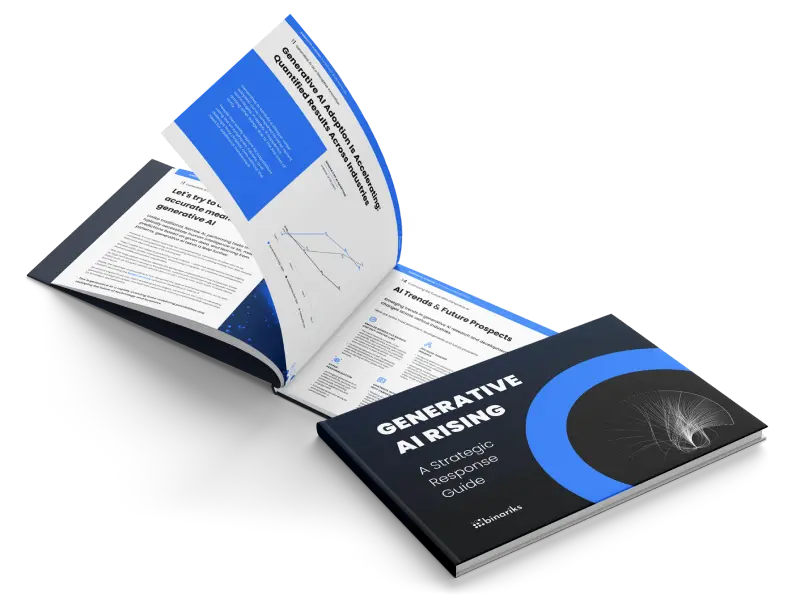
Will adopting GenAI mark the next chapter for your business?
Download our free whitepaper now to find out.
How we compiled this list of AI consulting firms in 2026
This list is based on independent research conducted in early 2026. We evaluated firms using publicly available data from Clutch, G2, and LinkedIn, as well as published case studies, client reviews, and technology stack disclosures.
To be included, a firm had to meet the following minimum criteria:
- Active AI consulting practice with publicly documented client engagements
- At least 3 verifiable case studies with described outcomes
- Evidence of end-to-end delivery capability, not advisory-only
- Presence across at least 2 of our three core industries: healthcare, fintech, and insurance
We deliberately included firms of different sizes and specializations, from boutique AI-exclusive consultancies to global systems integrators, to give a realistic picture of the market rather than a ranking of the biggest names.
Top 10 AI consulting companies to watch in 2026
The firms below were selected based on the methodology described above. They range from global systems integrators to boutique AI-exclusive consultancies. The right choice depends on your size, industry, and what stage of AI maturity you're at.
1. QuantumBlack

QuantumBlack is McKinsey's AI consulting division, combining data science, machine learning, and domain expertise to drive operational performance. Originally rooted in Formula 1 analytics, their methods are now applied across healthcare, mining, manufacturing, and financial services. They operate at the intersection of strategic advisory and technical delivery, with proprietary tooling and a global delivery network.
Key AI services: AI & advanced analytics for enterprise impact; MLOps & AI engineering; enterprise AI strategy; proprietary platforms (e.g., Kedro).
Industries: Mining, Pharma, Manufacturing, Financial Services, Healthcare.
Project example & results: For Freeport-McMoRan, QuantumBlack built AI models that increased copper ore processing at the Bagdad site by 10%, reaching over 85,000 metric tons per day. Clients cite "elite technical and strategic capability, especially for large-scale enterprise transformation."
Best for: Large enterprises and multinationals needing AI embedded into core business transformation programs, not standalone projects.
2. IBM

IBM remains one of the most widely deployed enterprise AI platforms globally, with a consulting practice built around their Watson and watsonx ecosystems. Their strength is scale: large-scale implementations in customer support automation, risk modeling, and process optimization across banking, healthcare, and government.
Key AI services: AI strategy, implementation, and support; predictive analytics and risk modeling; enterprise AI & hybrid cloud; watsonx platform consulting; industry transformation programs.
Industries: Banking, Healthcare, Government, Manufacturing, Retail.
Project example & results: In partnership with Bradesco Bank (Brazil), IBM developed a virtual assistant that handles over 280,000 customer inquiries per month, significantly reducing operational load. Clients note "strong technical leadership and robust infrastructure."
Best for: Fortune 500 companies and large enterprises requiring proven AI infrastructure, enterprise SLAs, and multi-year programs with a major systems integrator.
3. Binariks

Binariks is a software engineering and AI consulting firm specializing in healthcare, insurance, and fintech – industries where compliance, data governance, and production reliability are non-negotiable. With 30+ AI projects delivered, Binariks combines strategic consulting with hands-on engineering, helping clients validate use cases, build custom models, and integrate AI into existing systems.
Clients choose Binariks for deep domain knowledge, quality and technical expertise, handling complexities, a transparent and agile process, and a dedicated AI Center of Excellence that enables 50% faster project starts.
Key AI services: AI strategy & business case development; custom ML model development; agentic AI & generative AI; big data solutions; cloud-native integration; HIPAA/SOC2/EU AI Act-compliant architectures.
Industries: Healthcare, Insurance, Fintech.
Project example & results:
For a $45-50B commercial insurance provider, Binariks built an AI-powered document processing pipeline combining OCR, LLMs, and RAG to automate claims document review. Results: 90% reduction in time to extract and analyze risk data; 80–90% fewer manual review cycles; 20–30% improvement in decision confidence; foundation for 5x future scalability. MVP now in production.
Best for: Mid-market and enterprise companies in regulated industries needing end-to-end AI delivery, from strategy to production, with compliance built in from day one.
4. Accenture
Accenture is one of the largest professional services firms in the world, with a dedicated AI and data practice serving clients across every major industry. Their scale means access to deep specialization, global talent, and long-term program management.
Key AI services: Enterprise AI strategy & roadmap; generative AI & LLM consulting; data readiness & enterprise data foundation; responsible AI frameworks; workforce AI enablement; scaling AI for productivity.
Industries: Financial Services, Healthcare & Public Services, Communications & Media, Consumer Products, Technology.
Example project & results: Accenture partnered with a global energy company to build an AI-driven predictive maintenance platform, reducing unplanned downtime by 25% across production facilities. Example clients include Unilever, ESPN, HPE, and the United Nations.
Best for: Large, complex organizations needing multi-year AI transformation programs as part of broader digital and organizational change.
5. Deloitte AI Institute
Deloitte's AI practice combines management consulting depth with technical delivery capability, with particular strength in regulated industries and enterprise governance. Their Trustworthy AI framework makes them a natural fit for organizations where compliance and audit trail are central.
Key AI services: AI strategy & use case identification; generative AI integration; Trustworthy AI framework; analytics modernization; ML solutions; regulatory compliance architecture.
Industries: Financial Services, Life Sciences & Healthcare, Energy & Resources, Consumer & Public Services.
Example project & results: Deloitte built an AI-driven risk assessment platform for a major financial institution, automating credit review workflows and reducing decision time by 35%. Example clients include Adobe, Marathon Oil, and Yamaha.
Best for: Enterprises requiring governance-heavy AI adoption with strong compliance frameworks, audit requirements, and integration into existing risk management structures.
6. DATAFOREST
DATAFOREST focuses on AI, ML, and data infrastructure. With offices in Kyiv and Tallinn, they're known for building reliable GenAI systems, data lakes, and ETL pipelines for European and US clients. They hold a 5.0 rating on Clutch across 27 reviews and were named a Clutch Champion in 2024. Clients highlight their technical depth, responsiveness, and "ability to turn raw data into clear business value".
Key AI services: Data strategy & consulting; data engineering & DataOps; GenAI system development; business intelligence ; ML model development.
Industries: SaaS, Fintech, Retail, E-commerce.
Example project & results: For Estonian tech firm Perfsol, DATAFOREST built a Snowflake-based data lake and deployed GenAI agents. Results: 40% reduction in manual reporting; improved analytics turnaround time.
Best for: Startups and SMEs looking for strong data infrastructure foundations and GenAI implementation without enterprise-scale pricing.
7. Addepto
Addepto is a Poland-based AI consulting firm focused on end-to-end machine learning solutions for mid-market and enterprise clients. Their strength lies in building data pipelines, custom ML models, and decision-support tools, particularly in finance, energy, and retail.
Key AI services: End-to-end AI and data science solutions; predictive analytics & MLOps; business intelligence & data analytics; AI advisory.
Industries: Energy, Finance, Retail, SaaS.
Example project & results: For ClevAir, Addepto built a semantic data classification engine to clean and autofill incomplete datasets, improving pipeline performance and significantly reducing manual preprocessing time.
Best for: Mid-size companies in energy and finance implementing predictive analytics, MLOps pipelines, and decision-support tools.
8. Deeper Insights

Deeper Insights is a UK-based AI consultancy specializing in computer vision, NLP, and predictive analytics for healthcare, government, and enterprise automation. They focus on complex, data-sensitive projects where production-ready model quality and regulatory compliance matter.
Key AI services: AI & data science consulting; NLP system development; computer vision & ML; regulated-environment AI deployment.
Industries: Healthcare, Public Sector, Enterprise.
Example project & results: For Smith+Nephew, Deeper Insights developed a computer vision solution to analyze surgical images and guide robotic procedures, improving precision in orthopedic surgeries. Clients praise "deep AI research capability and ability to deliver production-ready models in highly regulated environments."
Best for: Organizations requiring custom AI in regulated or data-sensitive environments, particularly healthcare and public sector.
9. Sigma Software

Sigma Software is a Ukraine-based engineering firm with 2,000+ employees. They deliver ML-powered automation, personalization systems, and real-time analytics, combining deep engineering talent with enterprise delivery standards.
Key AI services: Custom software development; AI & data-driven solutions; ML-powered automation; augmented teams and consulting; innovation & R&D.
Industries: Telecom, Automotive, Finance.
Example project & results: For a telecom client, Sigma Software built a churn prediction engine based on behavioral ML models. Results: 12% improvement in customer retention; 18% reduction in campaign waste.
Best for: Large enterprises needing big data analytics infrastructure, ML-powered automation, and augmented engineering teams at scale.
10. Tkxel
Tkxel is one of the well-known software development and AI consulting companies in the USA, with strong delivery teams offering consulting services for logistics, retail, and enterprise operations. Their projects often combine machine learning with business intelligence and cloud-native deployment.
Key AI services: AI and digital transformation; Salesforce and CRM AI solutions; product design & UX/UI; ML-powered analytics dashboards.
Industries: Logistics, Retail, Enterprise Operations.
Example project & results: Tkxel built an AI-powered analytics dashboard for a logistics company. Results: 15% improvement in on-time deliveries. Clients highlight "agility, rapid prototyping, and commitment to measurable KPIs."
Best for: Growth companies and enterprises looking to accelerate AI adoption within Salesforce ecosystems and automate business processes .
Lift your business to new heights with Binariks' AI/ML development and consulting services
Our experience in AI consulting
At Binariks, we've spent years helping clients move from AI ambition to AI execution. As an experienced AI/ML development company , we work closely with your business from day one, helping you clarify goals, validate use cases, and design the right architecture for maximum ROI. Our AI Center of Excellence enables 50% faster project starts through structured delivery from strategy through deployment.
Our AI consulting projects span industries where precision and outcomes matter most:
Starting with in-depth data discovery workshops and risk process analysis, our AI consultants mapped integration opportunities between Loss Data Capturing and Claims Management systems.
The resulting FNOL integration platform improved automation, enabled rapid onboarding, and allowed the core team to focus on strategic priorities, enhancing claim registration speed and documentation quality.
Our engagement kicked off with needs assessment and feasibility workshops alongside healthcare stakeholders. We then engineered an AI-driven surgical video recognition tool to identify key operative events with high accuracy.
The result: improved OR scheduling, reduced manual documentation, and actionable analytics for better resource allocation and patient outcomes.
These are just a couple examples of how we turn AI concepts into operational results.
If you want an AI consulting and enterprise AI development partner who brings clarity, action, and proven technical depth, our team is here to help.
Conclusion
AI consulting represents one of today's most critical business investments. 78% of organizations use AI in at least one business function. Yet, for every 33 AI pilots , only 4 make it to wide deployment, often citing cost and unclear value as top reasons.
This gap highlights why choosing the right consulting partner matters as much as choosing the right technology. Firms with proper AI guidance consistently meet or exceed their expectations; well-executed AI implementations can deliver 3.5x returns on investment. But success depends on finding partners who translate business goals into working systems, not those who deploy technology for its own sake.
Use this guide to ask sharper questions, identify red flags early, and select a partner who matches both your technical needs and your long-term strategy.
FAQ
Author

Share

