Optimizing FNOL Workflows for a Property and Casualty Insurance Provider

Seamless

Smooth data exchange and accurate claim registration

Efficient

Reduced manual handling, optimized workflows

Project Overview

  • Country

    USA

  • Industry

    Insurance

  • Company size

    ~50,000 employees

  • Timeline

    Dec 2022 – Jan 2025

Our client is a P&C insurance provider that uses digital claims processing and automation to boost efficiency and customer service. Its First Notice of Loss (FNOL) system is central to fast, accurate claims management.

The client needed to expand its dev team to accelerate enhancements to FNOL and post-claim processing.

  • ~50,000

    employees

  • $45-50B

    annual turnover

Business Challenge

  • Poor integration between Loss Data Capturing channels and the CMS caused delays in claims processing, reducing customer satisfaction and impacting service response times.

  • System instability and downtime in core claims services could raise support costs, and expose the business to financial and reputational risks.

  • The lack of dedicated resources delayed issue resolution and halted new service development, restricting innovation and slowing the company’s ability to meet market demands.

  • The existing infrastructure lacked the scalability required to support evolving industry needs, making long-term growth and modernization efforts difficult to achieve.

Our Solution

Approach

Recognizing the urgency, the company decided to expand its development team to maintain core system availability, minimize downtime, improve the integration between Loss Data Capturing channels and the CMS, reduce operational costs through system optimization, and develop new services based on business requirements.

Binariks assembled a dedicated team of 5 developers, 1 AQA, 1 BA, and 1 Architect, working alongside the client’s Product Owner (PO) and 4 developers. Within a short timeframe, the team gained a deep understanding of the FNOL system architecture, ensuring alignment with the client’s core development team.

Process & execution:

  • Identified key stages of the project and structured the approach accordingly
  • Conducted additional clarification meetings to refine requirements and ensure alignment
  • Established a problem framework, created a Work Breakdown Structure (WBS), and set up an efficient team workflow

By adapting to the project’s scope and working closely with the client’s internal team, Binariks ensured a structured and efficient approach to system enhancement and ongoing development.

Implementation

The solution was implemented within strict client requirements, ensuring compatibility with existing services and secure data handling:

  • Security: Encryption in-transit (HTTPS) and at rest (AWS KMS).
  • Technology stack: Java (backend services) and Node.js (AWS-CDK for infrastructure).
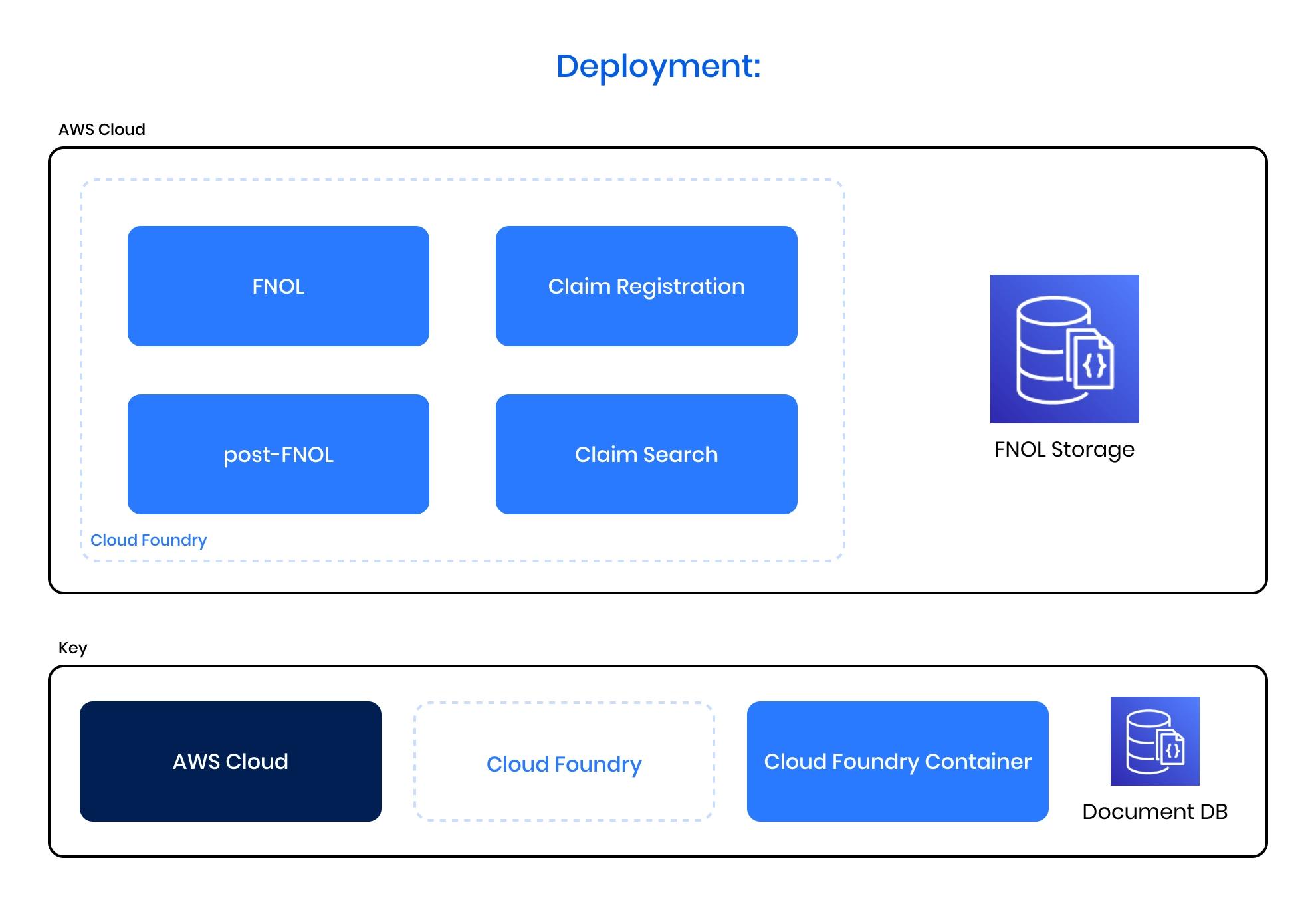
  • Cloud & DevOps: Deployed on AWS with Open Cloud Foundry (OCF), using OAuth2 authentication and IAM policies.
  • CI/CD: Bamboo Pipelines, later migrated to GitHub Actions.

System architecture & key components

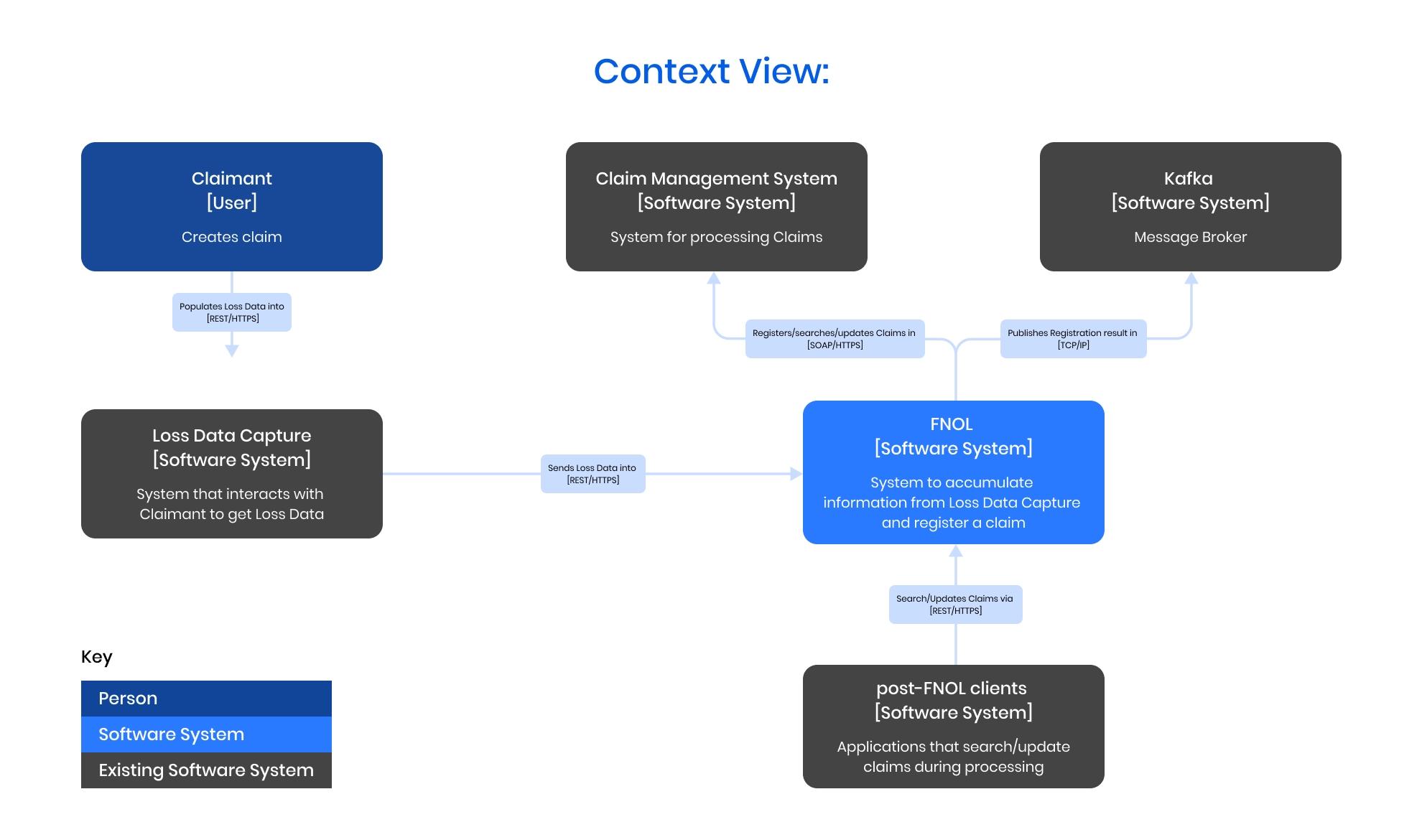
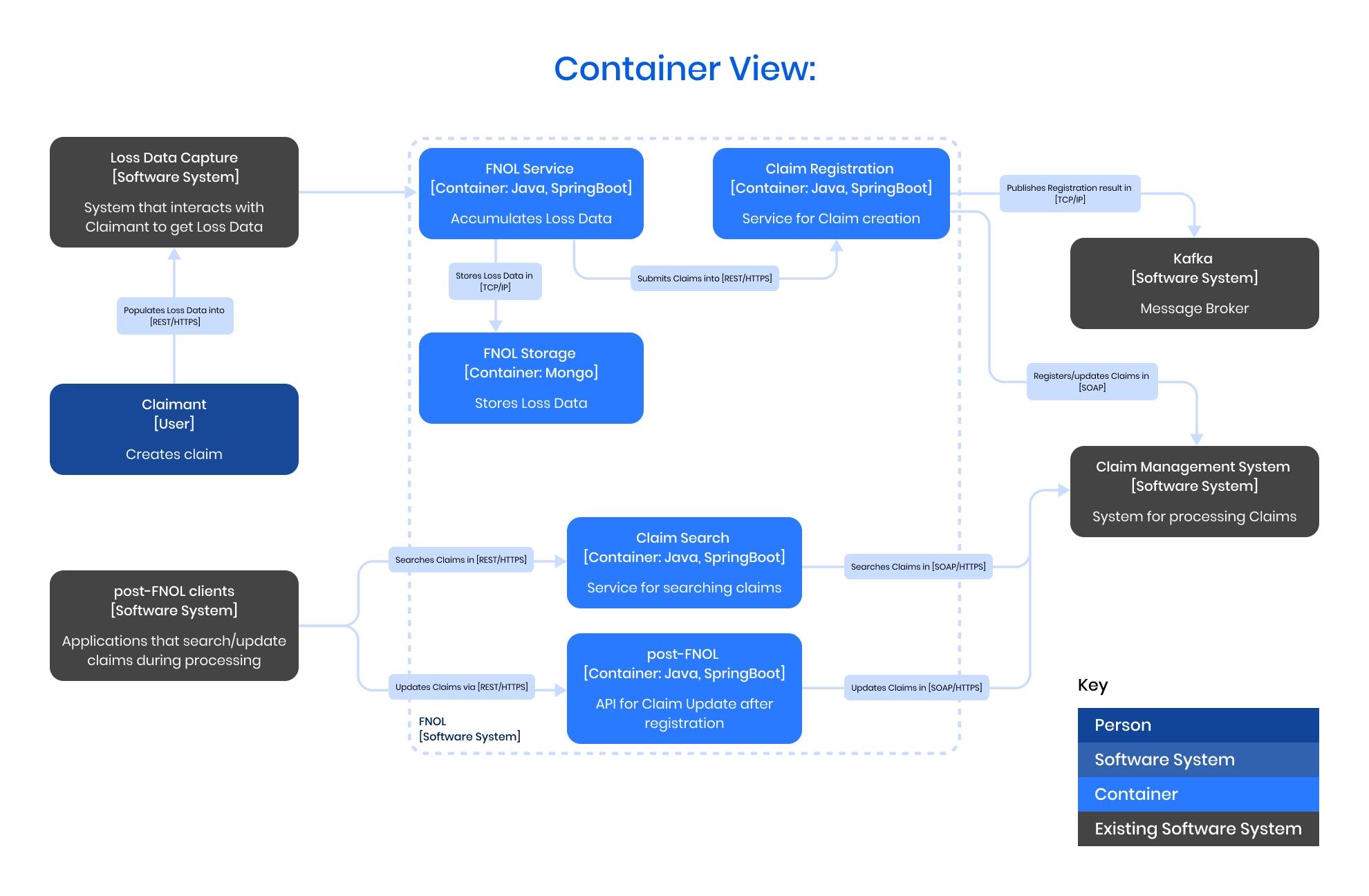
A set of developed backend services must act as a middleware between Loss Data Capturing systems and CMS, ensuring structured claim registration and updates.

  • FNOL system – Stores Claim Loss Data before registering claims.
  • Claim registration service – Creates new claims in CMS.
  • Claim search service – Allows searching claims by predefined parameters.
  • Post-FNOL service – Updates claims after registration.

Infrastructure & security enhancements

  • AWS-CDK (IaC): Enabled scalable and repeatable infrastructure provisioning.
  • Network security: Private VPC with Security Groups, RBAC/ABAC IAM Policies.
  • Authentication and secret management: OAuth2, Vault for credentials.

Key improvements

  • Extended CMS Web Services for new claim fields.
  • Migrated CI/CD pipelines to GitHub Actions.
  • Configured automated QA workflows.
  • Integrated monitoring and logging: AWS CloudWatch, Datadog, Splunk.

The implementation ensured seamless claim processing, improved system stability, and compliance with industry standards.

Technologies Used

  • Java
  • Node.js
  • AWS
  • Lambda
  • DynamoDB
  • AWS S3
  • Kafka
  • Java Spring Boot
  • OAuth 2.0
  • AWS IAM
  • AWS KMS

Value Delivered

The implemented solution is now fully operational in production, seamlessly integrating Loss Data Capturing systems with the Claim Management System (CMS). It successfully addressed all key challenges while delivering additional business and technical benefits.

  • Seamless

    Smooth data exchange and accurate claim registration

  • Efficient

    Reduced manual handling, optimized workflows

  • Stable

    Minimal downtime, higher service availability

The project has successfully addressed core operational bottlenecks:

  • Claims are now registered and updated with minimal manual intervention, ensuring real-time data synchronization between systems.
  • By shifting responsibilities for routine development and maintenance to Binariks, the internal team can focus on business-critical initiatives.
  • Infrastructure improvements enabled scalability, enhanced monitoring, and secure operation, reducing risks and simplifying compliance.

Additional business benefits are:

  • A new fuel identification feature improves repair service allocation
  • CI/CD quality gates and documentation enhanced maintainability
  • Binariks deepened its domain expertise in insurance tech, paving the way for ongoing cooperation

Let's Start Your Project

We'd love to hear about the project you're working on. Simply complete the form and we'll be in touch.

What happens next?

01

Our expert will reach out to understand your goals and challenges

02

If needed, we'll sign an NDA to ensure full confidentiality

03

You'll receive a tailored roadmap with solution suggestions, timelines, and budget estimates