

A mid-sized manufacturer applies for cyber insurance in 2026. The underwriter does not just read the application, they pull external scans of the exposed attack surface, request evidence of multi-factor authentication coverage, and check whether the company can detect a breach in hours rather than weeks. 20% off the premium, or a flat decline, will turn on those answers.
Nearly nine in ten C-level managers say their companies are not adequately protected against cyber risks, even as the global cyber insurance market grew to around $15 billion in 2025 and is on track to reach $28 billion by 2030. Demand is rising. So is what carriers expect to see before they say yes.
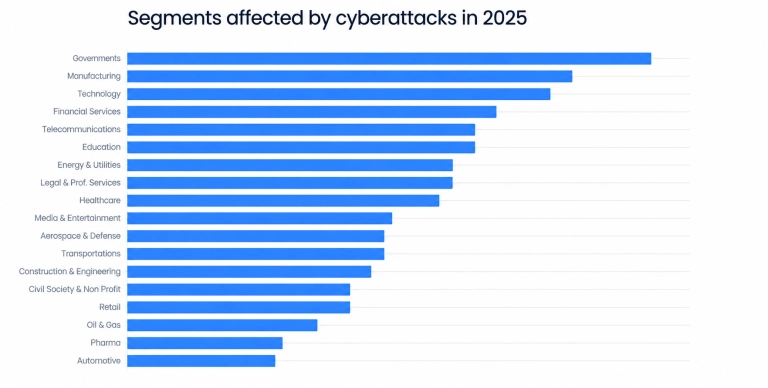
Also, data shows the threat is industry-agnostic: governments, manufacturing, and technology lead the targeted segments, but no sector sits this out, with healthcare, financial services, and education all near the top of the list.
At Binariks, we help insurers, MGAs, brokers, and regulated businesses build and modernize the digital systems behind cyber insurance products, underwriting, and claims operations through our insurance software development services . That work makes one thing clear: the carriers winning today are the ones treating policy administration, underwriting, and FNOL workflows as engineering problems, not paperwork.
After reading this article, you will know:
- Why cyber insurance underwriting now turns on technology evidence, not just coverage terms
- The four technology layers a modern cyber insurance operation actually needs
- Where AI and automation pay off in real workflows, and where they don't
- Which cyber insurance trends are reshaping pricing, underwriting, and claims in 2026
Why Cyber Insurance Is No Longer Just About Coverage
There was a time when buying cyber cover meant signing a policy schedule and filing it away. Those days are gone. Underwriters now treat the application as the start of a technical audit, not the end of a sales process. The premium quoted depends less on the policy wording and more on what the carrier finds when it looks at the applicant's actual environment.
According to Aon's 2026 cyber market report , underwriting reviews are now sharply focused on control maturity, vendor dependencies, AI use, and privacy practices. That is one of the defining cyber insurance trends of the past two years: cheaper premiums in many segments, but harder questions across the board.
That technical scrutiny has settled into five areas every underwriter now grades you on:
- Operational readiness. Can the business detect, contain, and recover from an incident in hours instead of weeks? Carriers look for written runbooks, tabletop exercise records, and proof of patching cadence.
- Identity and access controls. Multi-factor authentication is the baseline; coverage across email, VPN, admin accounts, and cloud consoles is what gets scored. A missing MFA enforcement on a single privileged account is enough to reshape a quote.
- Incident-response maturity. A written plan is not enough. Underwriters want evidence the plan has been tested, that detection and response telemetry actually exists, and that legal and PR retainers are in place before they are needed.
- Data visibility. If the applicant cannot say where its sensitive data lives, who has access, and what is logged, the carrier assumes the worst. Endpoint detection coverage, log retention, and SIEM maturity all show up in the underwriting file.
- Third-party exposure. Most breaches now arrive through a vendor. Carriers want a vendor risk register, contractual security clauses, and ideally external scanning of the supply chain itself.

Technology Requirements Behind Modern Cyber Insurance
Modern cyber insurance is a process and platform problem, not only a risk-transfer product. The carriers, MGAs, and brokers competing for business in 2026 are competing on the systems that sit behind the policy as much as on the policy itself, which is why cyber insurtech spending has held strong through the broader market softening.
According to Gallagher Re's Global InsurTech Report for Q1 2026, global InsurTech funding hit roughly .63 billion in the first quarter, with AI-focused firms leading and cyber-risk-related companies among the strongest themes. Four technology layers do the heavy lifting.
Underwriting Platforms
The underwriting platform is where a submission becomes a decision. Modern systems ingest broker submissions, parse documents with AI, pull external attack-surface data, run validation against carrier rules, and surface a risk score within minutes instead of days.
We built this kind of system at scale for a leading insurance company in the US and UK markets, converting variable broker submissions into standardized data with 80%+ automation of manual data extraction and validation .
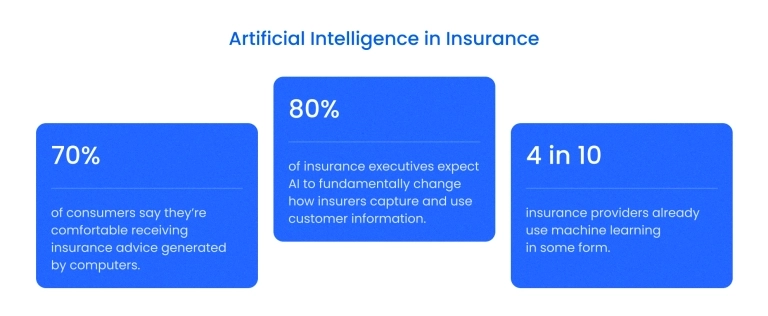
The point is consistency, so the same applicant gets the same risk view regardless of which underwriter opens the file.
Claims Workflows
A cyber claim starts with a customer in panic, often outside business hours, and turns into a multi-week coordination problem across legal, forensics, PR, and IT. A modern claims platform shapes that chaos: a self-service FNOL form that captures structured data from minute one, automatic notifications to the incident response panel, document intake with version control, reserve tracking, and a dashboard the claims handler actually uses.
Without that workflow layer, the digital risks in cyber insurance quietly become operational risks for the carrier itself, because cycle time and customer experience suffer in equal measure.
Data Integrations
Underwriting and claims both run on data the carrier does not own. External attack-surface scans, threat intelligence feeds, MFA-coverage attestations, SIEM and EDR telemetry, vendor risk scores, dark-web monitoring, and regulatory filings all flow through API integrations.
The carriers that automate those pulls reach a defensible risk view faster and at lower cost than carriers stitching screenshots together by email. Integration is also where the line between cyber insurance data analytics and pure security tooling starts to dissolve: the same telemetry feeds both.
Analytics and Decision Support
The fourth layer is where the platform earns its keep. Analytics turn raw telemetry into risk scores, portfolio accumulation views, and pricing guidance. Decision-support dashboards let an underwriter see why a model flagged an account, what control gap drove the score, and what coverage adjustments would change it.
Done well, the same engine powers cyber insurance innovation at the product level too: new sub-limits, parametric triggers, and dynamic pricing models become feasible once the data infrastructure can support them.
A modern cyber insurance operation runs on four technology layers: underwriting platforms that turn submissions into decisions, claims workflows that handle the chaos of an incident, data integrations that pull external risk signals automatically, and analytics that connect them all into a defensible risk view and a competitive product.
Related Case Study
Scaling Enterprise File Collaboration: How Binariks Helped a Global Cloud Provider Accelerate Secure Platform Growth


Scaling Enterprise File Collaboration: How Binariks Helped a Global Cloud Provider Accelerate Secure Platform Growth
Binariks helped a global cloud collaboration provider accelerate feature delivery and platform scalability while maintaining enterprise-grade security. Our dedicated team strengthened web and mobile applications, enhanced performance, and ensured continuous, secure releases. The collaboration enabled faster development cycles and sustained innovation without compromising reliability or data protection standards.

Where AI and Automation Create Value in Cyber Insurance
AI in cyber insurance gets oversold, then under-explained. The honest version: it is not magic, and it is not replacing underwriters or claims handlers. It is removing the slow, repetitive parts of their jobs so the human attention goes where it actually matters, on the borderline accounts and the messy claims. AI cyber insurance delivers value in four practical places, each tied to a real workflow.
- Submission triage and underwriting. AI parses broker submissions, pulls structured fields out of unstructured documents, and matches them against carrier risk appetite within seconds. Underwriters open a clean, enriched file instead of a stack of PDFs. The volume problem (too many submissions, too few underwriters) is where the payoff is most visible.
- External attack-surface analysis. Machine-learning models score an applicant's exposed assets, certificate hygiene, exposed services, and credentials in dark-web dumps. The carrier gets a defensible risk signal from outside the application form, not just the applicant's self-report.
- Claims triage and fraud detection. ML models flag suspicious patterns at FNOL, route clean cases to fast-track approval, and surface the few that genuinely need investigation. Claims handlers spend their hours on the complex incidents, not on chasing duplicate filings.
- Renewal and portfolio analytics. AI looks at the book of business, surfaces accumulation risk across cloud providers or shared software stacks, and flags the renewals where exposure has drifted since the last underwriting cycle.
Executives are bought in. Munich Re's 2026 survey of more than 9,500 C-level managers across 20 countries shows positive perception of AI rising sharply with company size, particularly among $200M+ revenue businesses, where trust in companies using AI is highest.
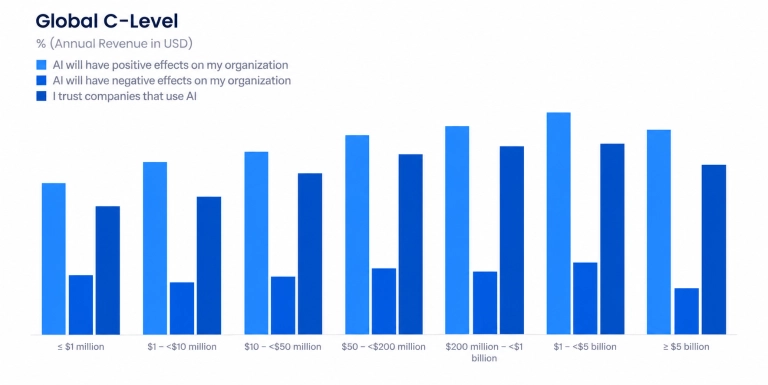
That is a tailwind for carriers building AI cyber insurance capability; it is also a signal of the cyber insurance challenges ahead, because the same survey shows 63% of executives also want to buy insurance against AI-related risks of their own.
The pattern across all four use cases is the same: AI handles volume and pattern recognition; humans handle judgment and edge cases.
Cyber Insurance Market Trends in 2026
The 2026 cyber insurance market is a strange place. Premiums are flat or falling in most segments, capacity has expanded, and yet underwriting has never been more selective. According to Swiss Re, global cyber premiums will reach about .4 billion in 2026, with the long-term growth outlook revised down from 6% to 5% CAGR after a third consecutive year of rate deterioration.
The market is growing, but more slowly and more disciplined than the hard-market years of 2021 and 2022 suggested. Five trends shape the future of cyber insurance in this environment.
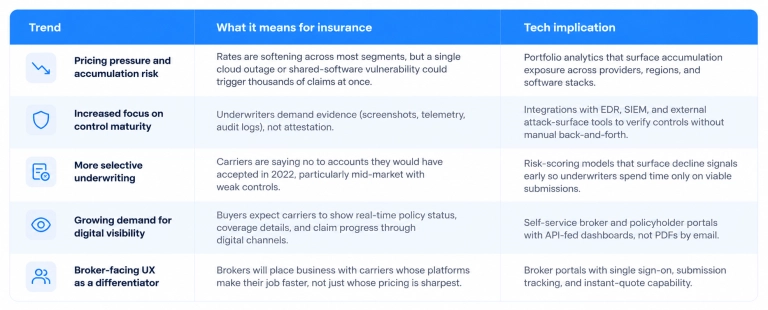
The thread connecting all five: technology is the difference. Carriers that can read controls evidence at speed, surface accumulation exposure across their book, and give brokers a portal that does not waste their time will win share even in a softening market.
The future of cyber insurance belongs to operators who treat the platform as part of the product. Carriers competing on price alone are competing on the one lever they cannot easily defend.
Note that the same Swiss Re analysis flags SMEs as cyber's "biggest open runway", which is one more reason platform investment matters: serving 100,000 SMEs profitably is a process problem before it is a pricing problem, and that is one of the practical cyber insurance trends every carrier should be planning for.
How Carriers, MGAs, and Brokers Can Become Insurability-Ready
"Insurability-ready" is a phrase that gets used loosely. Pinned down, it means an organization in the cyber insurance value chain has the data, evidence, and platform readiness to make underwriting decisions, place coverage, or qualify for it without scrambling.
For an insured business, that means producing controls evidence on demand. For everyone in the chain, it means owning the technology that turns risk signals into decisions at the speed the market now expects. The specifics differ by role:
Carriers
Becoming insurability-ready means owning the data pipeline end to end: external attack-surface scanning, telemetry ingestion from EDR and SIEM vendors, automated submission triage, accumulation models that cover cloud providers and shared software stacks, and analytics dashboards that surface portfolio risk before it surfaces as a loss. Cyber risk analytics for insurers is the spine of all of this, and the carriers without it will price blind and pay claims they should have declined.
MGAs
The MGA's advantage is speed and specialization, and that only works if the technology supports it. Insurability-ready MGAs run on lightweight but defensible underwriting platforms, with clear delegated authority logic, real-time reporting back to the carrier, and the same controls-evidence infrastructure as a direct carrier. The MGAs winning new programs in 2026 are the ones whose tech makes them feel like an extension of the carrier's own stack, not a separate workflow that has to be reconciled.
Brokers
For brokers, insurability-ready means being able to walk into a renewal with the client's controls evidence already structured, the carrier-specific application data pre-filled, and the submission packaged for fast underwriting decisions. Brokers without that capability lose to brokers who have it, because the underwriter quotes the cleaner submission first. This is also where broker-facing UX directly affects placement: the carrier portal a broker actually likes using gets more business.
The common thread across all three is uncomfortable: insurability-readiness is mostly an engineering and data problem now, not a sales or underwriting one. Treating it as anything else is the most common of the cyber insurance challenges carriers, MGAs, and brokers face heading into a more disciplined market.
Claims Operations in Cyber Insurance
Claims is the part of cyber insurance that gets discussed least and decides the most. A policyholder who has just been ransomwared is not in the mood to learn your portal. They want a human to call back fast, a clear next step, and a payment that actually arrives. Get that right and you have a customer for life. Get it wrong and the next renewal is gone, the broker is on the phone to your competitor, and your reputation moves through the market in days.
The data backs the stakes. The 2025 Digital Experience Index found 22% of consumers have avoided filing an insurance claim because the process was too frustrating, and 64% would switch insurers for a better digital experience. In cyber, where claims arrive at 2am after an attack and brokers watch every handoff, those numbers translate directly into retention and broker trust.
A modern cyber insurance claims operation captures structured data from minute one, not after the dust settles. The data points worth having in the file from the start include:
- Time of incident detection and time of first notice of loss (the gap matters)
- Affected systems, data classes, and approximate record counts
- Initial threat indicators (ransomware family, suspected vector, ransom demand if any)
- Insured's incident response panel members already engaged (legal, forensics, PR)
- Backup status and recovery point objective at the time of incident
- Regulatory notification clocks already running (GDPR 72-hour, state-level breach laws)
- Initial business interruption estimate and current operational status
Carriers and MGAs that capture this through structured intake at FNOL feed it straight into the claim file, the incident response workflow, and the reserves model in parallel. Carriers still capturing it through phone calls and PDFs lose hours when hours matter most.
This is the engineering work we do on the claims side too. The collision management platform we built for a UK insurtech is a parallel case: two web apps, one for the driver capturing structured incident data at the scene, one for the insurer's claims handlers managing it, with both feeding the same record. That same architectural pattern (structured customer-facing intake plus an internal handler workflow on the same data spine) is the foundation of a defensible cyber cyber insurance operations stack. Get the intake right and everything downstream gets faster.
Data Visibility and Incident Response Maturity
Carriers are increasingly making underwriting calls on something that used to be invisible to them: how well an applicant can actually see inside its own environment, and how quickly it can act when something goes wrong.
Two organizations with identical revenue, industry, and stated controls can now get very different quotes based purely on this. The one that produces logs, telemetry, and a tested incident-response plan on demand gets a sharper price. The one that cannot gets loaded, sub-limited, or declined.
Data visibility, in practice, means three things underwriters can actually verify: an asset inventory that matches reality, log coverage across endpoints, identity systems, and cloud workloads, and retention long enough to support a real forensic investigation (usually 12 months minimum).
Incident response maturity layers on top: a written plan, a tested plan, named external partners (forensics, legal, PR) under retainer, and detection-to-containment metrics from real or simulated incidents. Underwriters now ask for evidence of all of these, not just attestation that they exist.
According to IBM, organizations with high levels of security AI and automation contained breaches roughly 80 days faster than those without and saved an average of .9 million per incident .
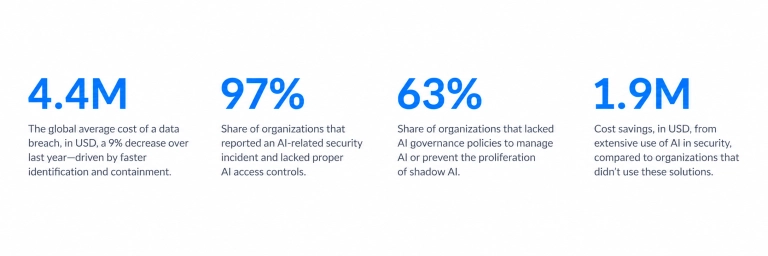
That number does two things in an underwriting file. It justifies a lower premium for applicants who can demonstrate the capability, and it sharpens the decline rationale for applicants who cannot. Cybersecurity in the insurance industry has converged with the cybersecurity inside the insured itself, because the carrier is now pricing both.
The downstream effect on cyber insurance underwriting is direct and growing. Carriers with the platform to ingest telemetry and incident-response evidence at scale can offer terms that less-equipped carriers cannot match, because they actually see the risk.
Building that ingestion and analytics layer is core to the kind of work we do in our insurance software development practice , where the brief is usually less "automate a workflow" and more "give underwriters a defensible risk view from data they could not previously read."
Binariks' Experience in Cyber Insurance Software
We are not a cyber insurance brokerage and we do not write policies. However, what we do is build the software that lets carriers, MGAs, and brokers run modern cyber insurance products and operations, the systems sitting underneath underwriting decisions, broker placements, and claims workflows.
For regulated businesses operating in this space, our role is closer to insurance tech modernization than custom development: we take stacks that grew up around policy administration and reshape them for a market that now expects everything to happen at speed, with evidence, and through a clean digital interface. The practical benefits of cyber insurance technology investment show up in two places at once: in the carrier's loss ratio and in the broker's renewal rate.
Across cyber insurance work specifically, we build:
- Underwriting platforms that parse broker submissions, pull external risk signals, and surface a defensible risk score in minutes
- Broker portals with single sign-on, submission tracking, and instant-quote capability, the kind of broker-facing UX that decides where business gets placed
- Claims workflows with structured FNOL intake, panel coordination, and reserves tracking, built for the 2am incident not the office-hours email
- Data integration layers that pull attack-surface scans, telemetry, vendor risk scores, and threat intelligence into one underwriting and claims pipeline
- Analytics dashboards that turn that data into portfolio accumulation views and pricing guidance, not screenshots in a Powerpoint
- AI-assisted review tools that compress submission triage, document parsing, and claims fraud detection so human attention goes to the calls that need it
Among the leading cyber insurance companies, those investing in technology are gaining a competitive edge. The goal is not software modernization for its own sake, but more efficient operations, better risk assessment, and stronger insurance products. For carriers, MGAs, and brokers competing on both platforms and policies, Binariks can help turn these priorities into practical technology solutions. Explore how we can support your insurance modernization goals.