AI-Powered Pharmaceutical Documentation: Transforming Manual PIL Creation into Automated Compliance

85%

reduction in processing time

2-3 weeks → 1-2 days

PIL processing time

Project Overview

  • Country

    EU

  • Industry

    Pharma and Life Sciences

Our client is a mid-sized pharmaceutical company based in Europe, specializing in developing and marketing prescription medications.

Like many forward-thinking organizations in the pharmaceutical sector, they are actively pursuing digital transformation initiatives to streamline their operations and maintain competitive advantage in an increasingly fast-paced regulatory environment.

Business Challenge

  • 2–3 week PIL creation cycles delayed product launches and market entry.

  • Manual document preparation increased the risk of overlooked or inconsistent information.

  • Heavy reliance on regulatory expertise created resource constraints for every leaflet.

  • Repetitive documentation work took regulatory teams away from higher-value activities.

Our Solution

Approach

Understanding the complexity and regulatory sensitivity of pharmaceutical documentation, we designed a tailored approach specifically for this challenge:

Team Assembly & Expertise Matching

We carefully selected specialists who underwent rigorous external and internal interviews, ensuring deep expertise in both AI/ML technologies and pharmaceutical regulatory requirements. Our team included professionals with proven track records in RegTech solutions.

Structured Project Framework

We identified key phases for addressing the challenge:

  • Discovery and regulatory compliance analysis
  • Rule-based logic development with iterative refinement
  • Human-in-the-Loop (HITL) validation cycles
  • Proof of Concept delivery and testing

Collaborative Discovery Process

We established additional clarification meetings with the client's regulatory affairs team and subject matter experts to ensure complete understanding of EU compliance requirements and internal processes of pharmaceutical companies..

Problem Framing & Execution Setup

After thoroughly analyzing the regulatory landscape and client needs, we framed the challenge as an AI-powered automation solution enhanced by pharmaceutical domain expertise. We structured a dedicated team and initiated the project with clear compliance and accuracy objectives.

The project followed our proven delivery methodology, transitioning seamlessly into a maintenance phase where Binariks continues to provide ongoing support and potential enhancements.

Implementation

Our technical solution leveraged cutting-edge AI capabilities while maintaining the precision required for pharmaceutical regulatory compliance:

Core Architecture

We developed a Proof of Concept tool using Microsoft Copilot as the AI foundation, enhanced with sophisticated rule-based logic specifically designed for EU pharmaceutical regulations. The solution architecture includes:

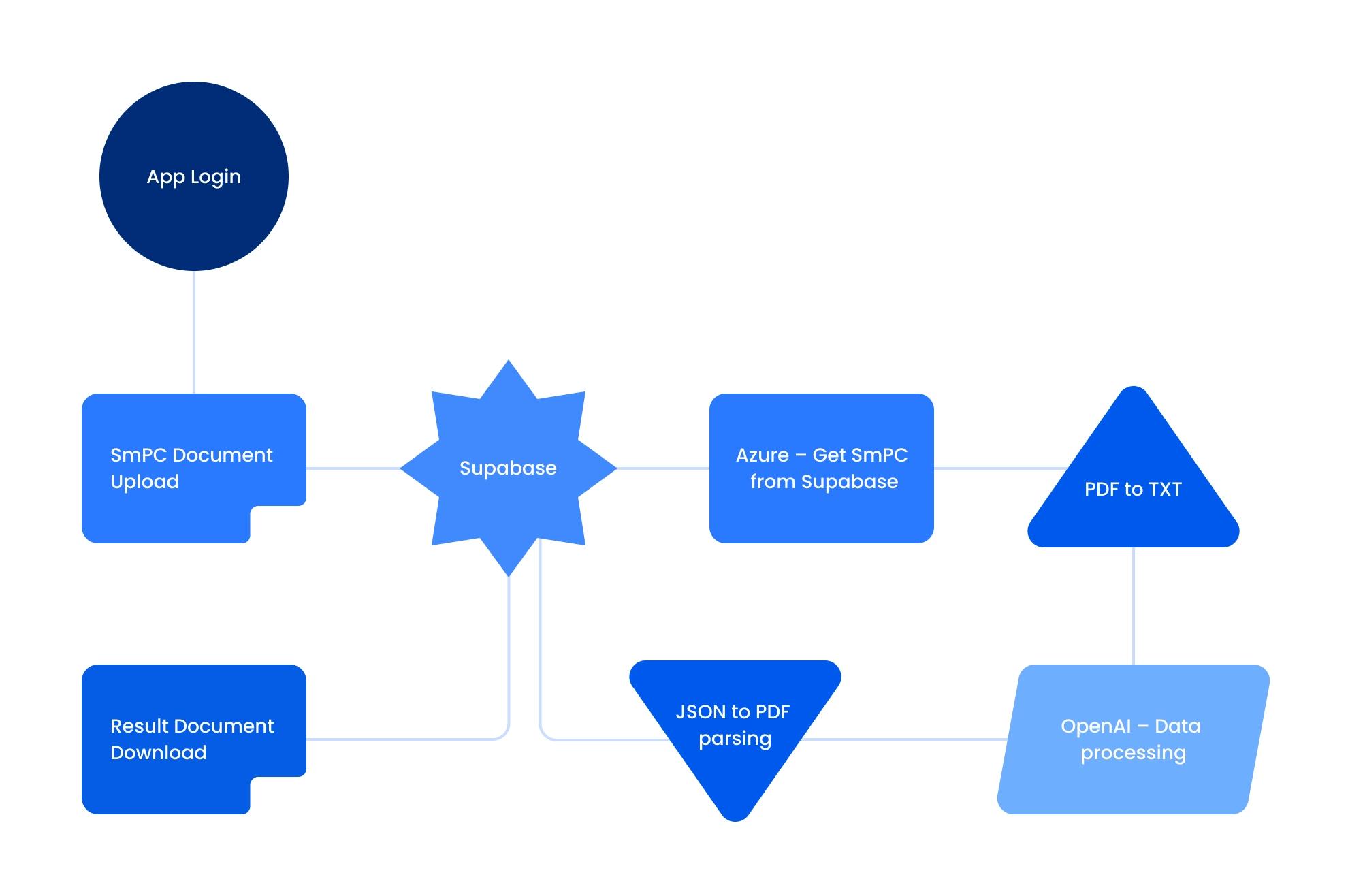
  • Document processing engine: Automated SmPC document ingestion and parsing
  • Rule-based transformation logic: Iteratively refined rules ensuring EU compliance standards according to the guidelines
  • AI-enhanced content generation: Leveraging Copilot's language capabilities while maintaining regulatory precision
  • Human-in-the-loop validation: Built-in review cycles conducted by subject matter experts
  • Compliance verification: Automated checks against EU pharmaceutical leaflet requirements

Key Technical Components

  • Input processing: Seamless upload and analysis of SmPC documents in various formats
  • Intelligent extraction: AI-powered identification of key pharmaceutical information sections
  • Regulatory mapping: Automated conversion following EU-specific leaflet structure requirements
  • Quality assurance: Multi-layer validation ensuring accuracy and compliance
  • Output generation: Production of compliant EU patient information leaflets

Scalability Foundation

The solution backbone is designed to support future enhancements, including:

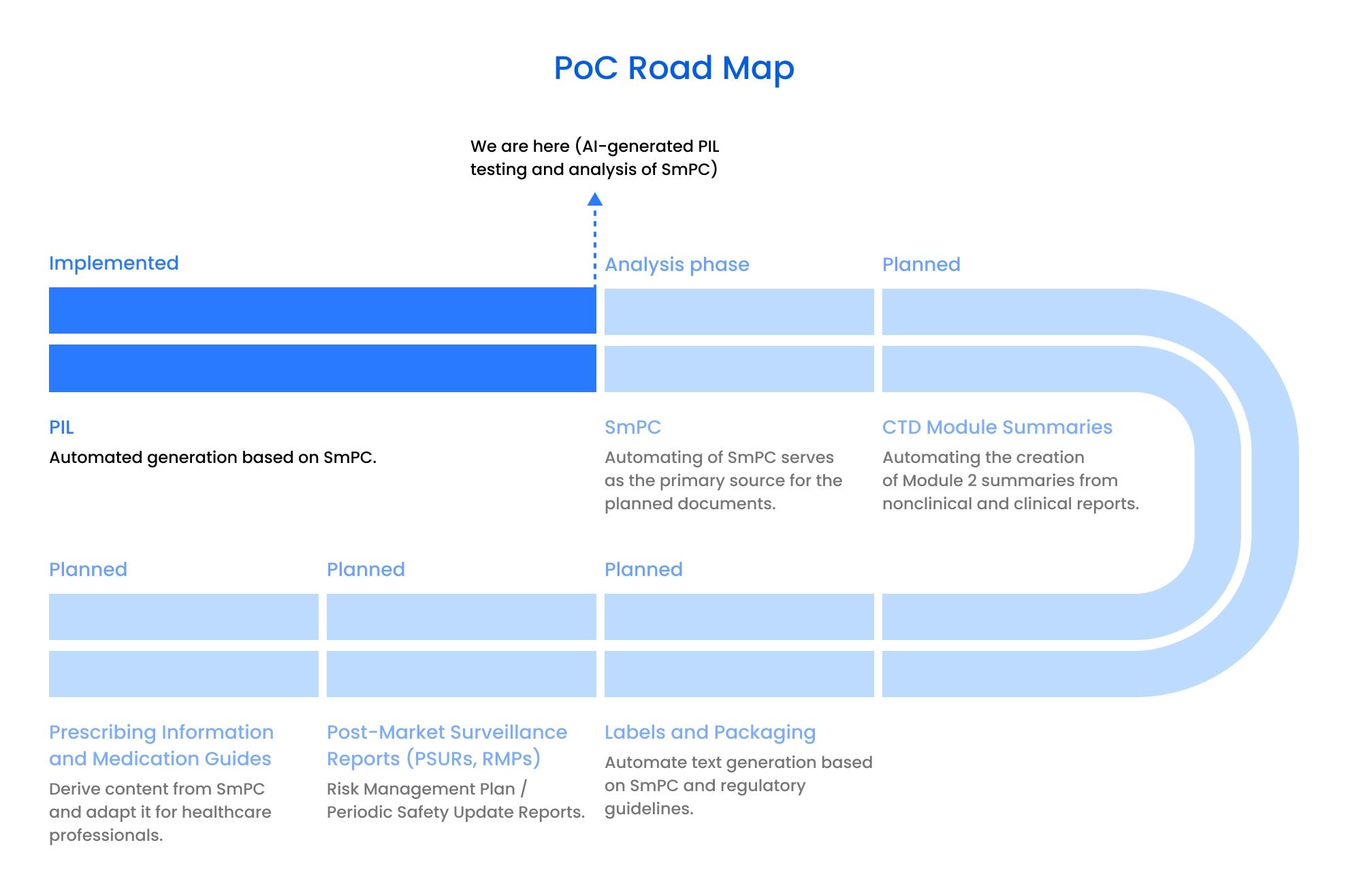
  • Additional pharmaceutical document types (SPL to MedGuide for US market)
  • Multi-regional compliance adaptations
  • Automated translation capabilities
  • Integration with existing pharmaceutical management systems

Technology Stack

  • AI platform: Copilot for advanced language processing
  • Development approach: Agile methodology with continuous feedback integration
  • Validation framework: Human-in-the-Loop collaboration with pharmaceutical SMEs

Technologies used

  • React
  • Azure Microsoft
  • PostgreSQL
  • Flowise
  • Python

Value Delivered

The solution reduced a documentation process that previously required 2–3 weeks to 1–2 days for review and approval, resulting in an 85% reduction in processing time.

By combining AI-supported content generation with regulatory rules and Human-in-the-Loop review, the client was able to automate repetitive SmPC-to-PIL transformation while maintaining regulatory oversight.

  • 85%

    reduction in processing time

  • 2-3 weeks → 1-2 days

    PIL processing time

  • Dramatic time and cost reduction: Manual PIL creation dropped from 2-3 weeks to 1-2 days for review and approval – an 85% reduction in processing time that significantly lowered operational expenses and accelerated market entry.
  • Enhanced accuracy and consistency: AI-driven, rule-based content mapping precisely converts SmPC information into patient-friendly PIL sections, reducing human errors and maintaining consistency across all documentation – critical in zero-tolerance regulatory environments.
  • Regulatory compliance achievement: All generated PILs adhere to EU regulatory standards for content, formatting, and readability, ensuring full compliance with Directive 2001/83/EC. Automated compliance verification eliminates regulatory rejection risks.
  • Scalable operations: The client now manages multiple product launches simultaneously without previous resource constraints. The automated solution scales effortlessly across product portfolios, enabling faster market entry and competitive advantage.

Additional value discovered:

  • Strategic resource reallocation: Regulatory teams focus on strategic initiatives instead of repetitive documentation
  • Process standardization: Consistent methodology ensures uniform quality and compliance
  • Future-ready foundation: Architecture supports expansion to additional document types and regulatory regions

Let's Start Your Project

We'd love to hear about the project you're working on. Simply complete the form and we'll be in touch.

What happens next?

01

Our expert will reach out to understand your goals and challenges

02

If needed, we'll sign an NDA to ensure full confidentiality

03

You'll receive a tailored roadmap with solution suggestions, timelines, and budget estimates