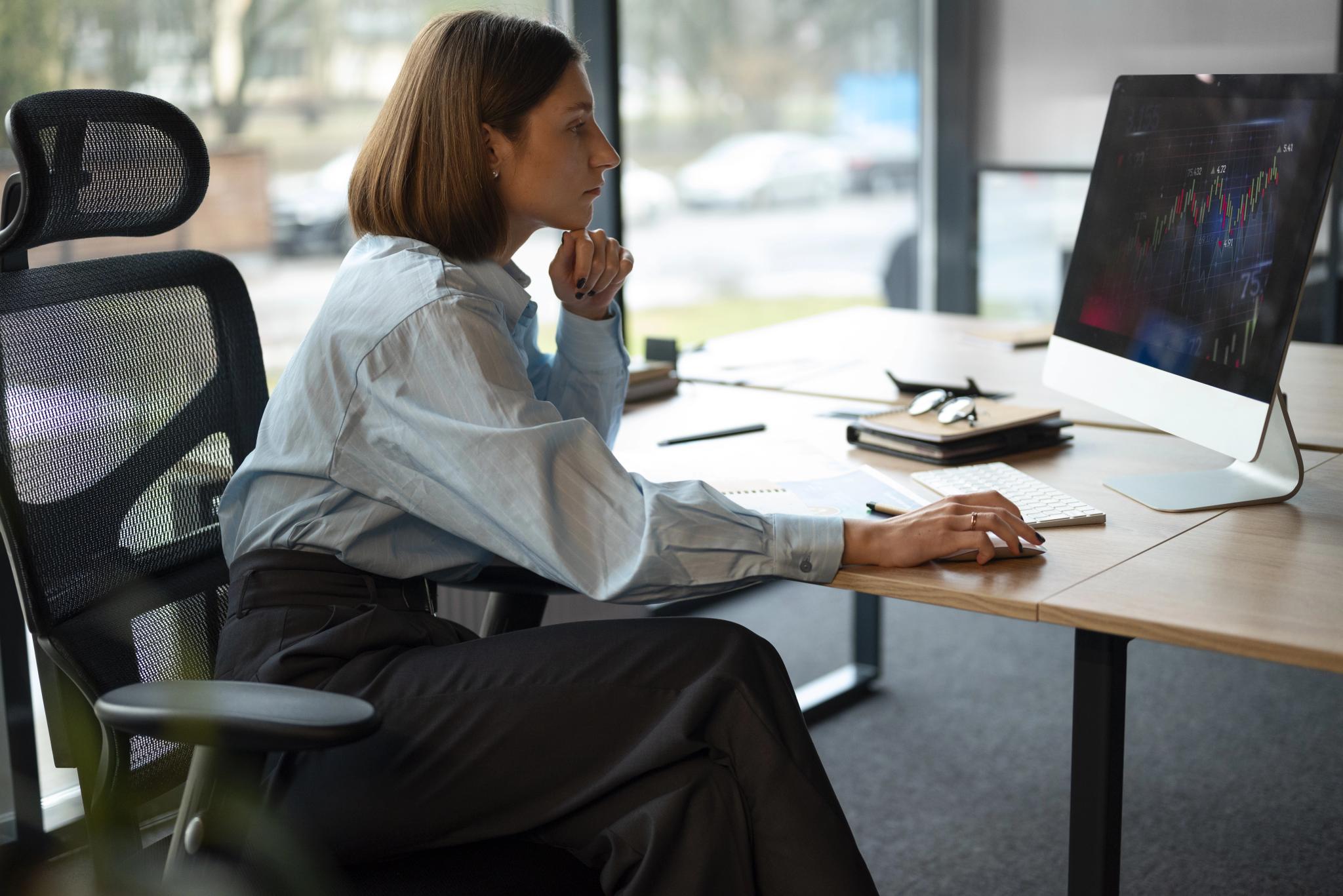
Binariks built the entire AI-powered system, integrating it with the client's existing platforms. The solution targets organizational employees as end users, allowing them to self-assess workspace ergonomics via video and image capture – with the output used as an additional data stream in broader health and safety monitoring tools.
Binariks developed the entire AI-powered system, integrating it into the client’s existing platforms. The solution serves both internal ergonomics specialists and end users – employees at client organizations.
It supports two key use cases: in self-assessments, it automates parts of the evaluation by pre-filling data based on video and image analysis; in virtual ergonomic assessments, it captures structured data that can be reviewed by professional ergonomists for deeper analysis. This dual functionality streamlines both employee-led and expert-led assessment workflows, improving accuracy and efficiency across the board.
We selected PyTorch as our primary deep learning framework, integrating it with MMPOSE and various lightweight ML libraries for model training and evaluation. The development pipeline leverages AWS SageMaker for scalable training workflows. For dataset creation and annotation, we deployed Label Studio. The final application follows an event-driven architecture, using AWS Lambda functions as the core execution units and Amazon DynamoDB for persistent data storage.
Main Components Included:
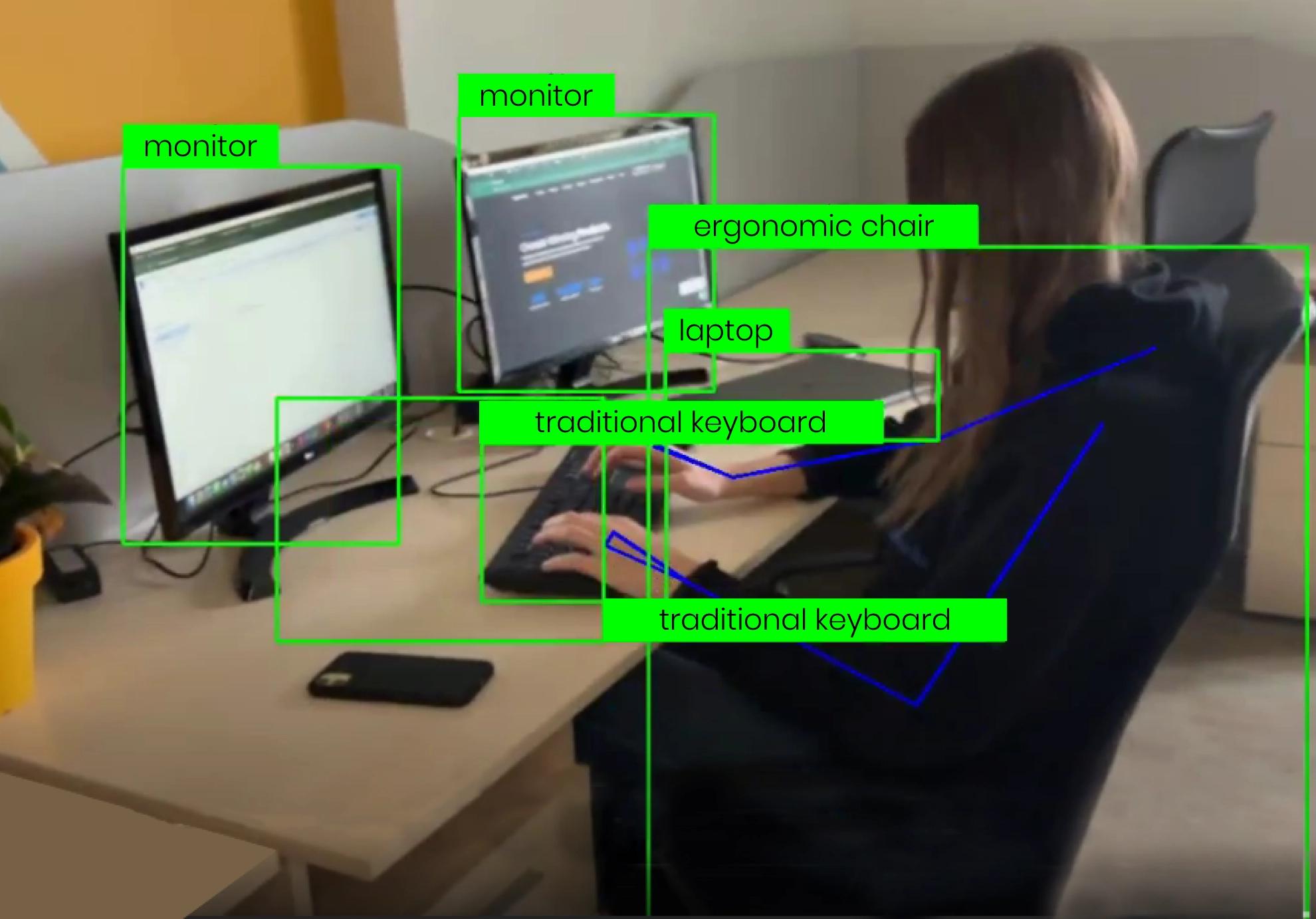
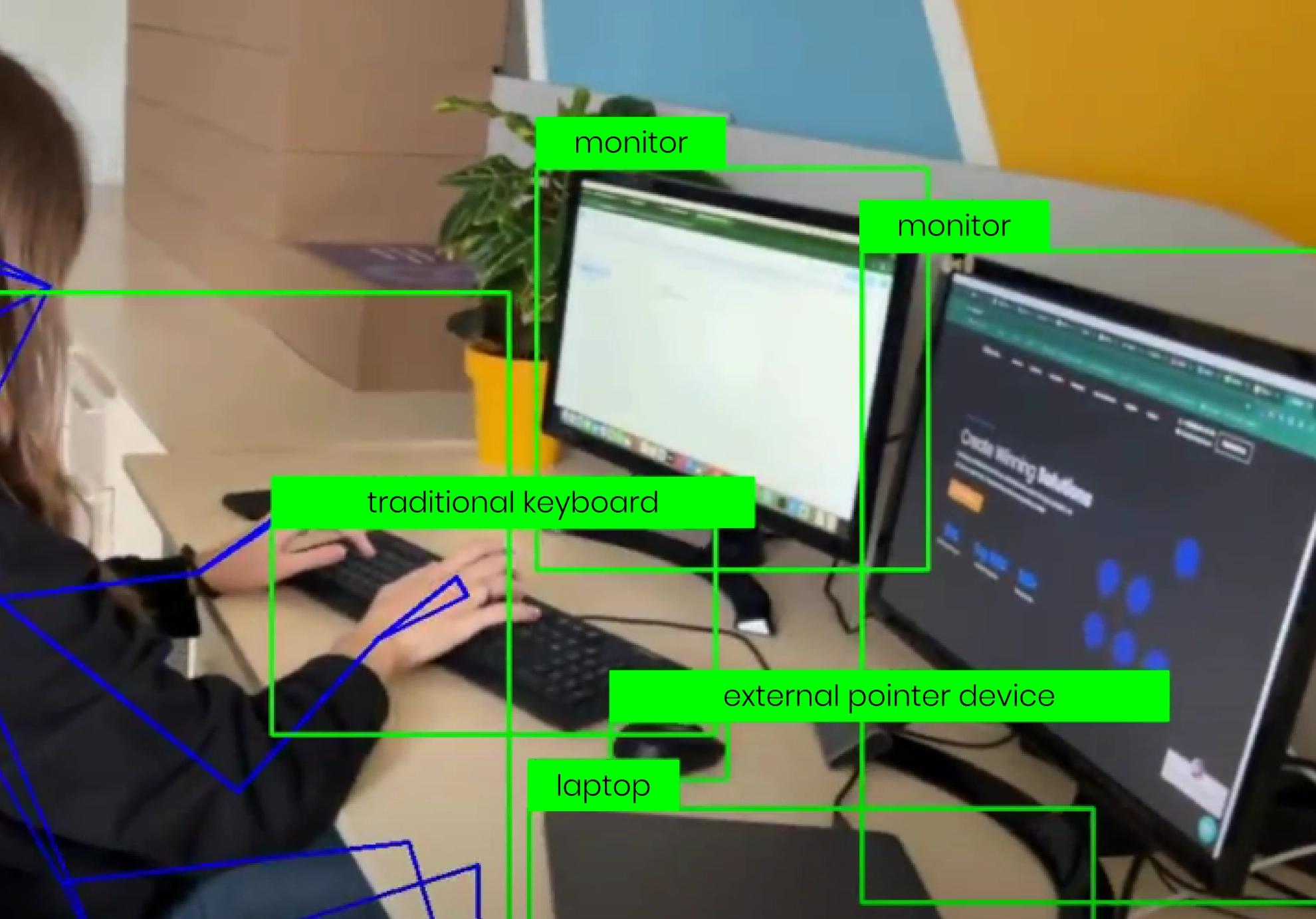
- Pose detection: To address the challenge of detecting body postures in varied office scenarios, we initially used MediaPipe for early experiments and later enhanced its predictions with custom pose estimation models built using the MMPose toolkit. These models were trained on custom-labeled datasets, tailored to capture the key information required for downstream calculations.
- Office object detection: Detecting and differentiating similar items (e.g., wired vs. wireless mice) was achieved by training and evaluating multiple object detection models. Transfer learning was applied to adapt to new, client-specific object classes.
- Data annotation: The annotation process was conducted via Label Studio, where we integrated machine learning model predictions to streamline labeling and improve efficiency.
- Model training: We transitioned to SageMaker Notebooks for scalable training and experimentation. The AI/ML models were refined to deliver accurate real-time assessments of desk layout and user posture.
- Architecture decisions: We deliberately opted for object detection over multi-label classification to support future depth estimation and spatial analysis — laying the groundwork for 3D interpretation of ergonomic risks.
Our team delivered a production-ready solution through close collaboration and ongoing research while ensuring extensibility for future model tuning and deeper ergonomic insights.