Artificial Intelligence (AI) Integration

Binariks delivers AI integration services that connect advanced AI solutions with your existing systems ??? driving automation, actionable insights, and growth for businesses across the US and worldwide.

Engagements range from integrating pre-built AI APIs into legacy systems to building custom pipelines that connect ML models, data sources, and business applications into a unified, production-ready architecture.

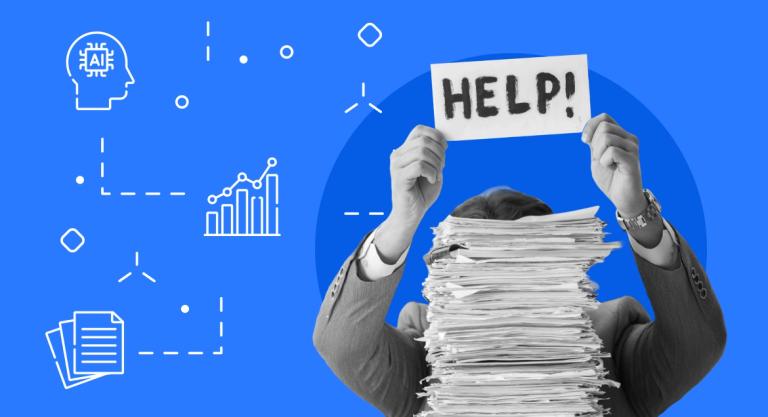
Leverage Binariks' AI integration services to eliminate slowdowns from manual tasks and support overload. Free your team to focus on growth while AI handles routine work instantly and accurately, 24/7.

Get a Consultation

What Is AI Integration?

AI integration is the process of connecting AI models, tools, or services with the systems, data, and workflows your organization already uses. Instead of operating as a standalone experiment, AI becomes part of day-to-day operations: retrieving approved data, supporting or automating specific tasks, returning results to the right application, and escalating decisions that require human review. For your organization, this could mean adding intelligent document processing to a claims platform, predictive insights to an EHR or banking system, or an AI assistant to a CRM without replacing your core infrastructure. Effective integration also includes APIs, data pipelines, access controls, monitoring, audit logs, and governance, helping the solution remain secure, reliable, explainable, and maintainable in production.


Custom AI System Integration Services

Binariks specializes in custom AI integration solutions, seamlessly connecting advanced AI engines to your unique workflows, business data, and existing software. Our tailored approach ensures that every integrated AI component aligns perfectly with your operational needs, driving efficiency, accuracy, and measurable business results. 

Pre-Built AI Solutions Integration

Our artificial intelligence integration services include the deployment of leading AI APIs and cloud-based tools, such as Azure Cognitive Services, AWS ML, and OpenAI. We integrate these powerful pre-built AI technologies into both legacy and modern systems, enhancing performance, automating tasks, and optimizing business processes without major system overhauls. 

Generative AI and LLM Integration

Unlock innovation with our generative AI integration services. We implement solutions like OpenAI, custom large language models, and AI-powered content generation, enabling automation, hyper-personalization, and smarter communication. Binariks ensures secure, compliant deployment tailored to your industry and regulatory environment.

Process Automation with AI

Binariks provides AI system integration services that automate repetitive business processes using machine learning, NLP, and robotic process automation (RPA). From customer support to document management, our solutions increase productivity, reduce manual effort, and allow your team to focus on strategic initiatives.

Data Engineering and Preparation

As a leading AI integration company, we offer comprehensive data engineering services, aggregating, cleaning, and structuring your business data for optimal AI performance. Our expertise ensures reliable data pipelines and seamless integration, setting a solid foundation for scalable, future-ready artificial intelligence solutions. 

Benefits of AI Integration

Transform your business with AI-enhanced workflows: faster, smarter, and more productive.

Why Clients Trust Us

Insights into our team achievements and valued partnerships

From Integration to Production

AI integration delivers value only when the connected system actually works in production.
Every engagement ends with AI capabilities embedded into your workflows: tested against your data, validated against your compliance requirements, and documented so your team can operate and extend what's been built.

The practical result?

Routine processes that previously required manual intervention run automatically, your existing systems gain new capabilities without being replaced, and your data flows are governed end-to-end.

  • AI components integrated with your existing systems (EHR, CRM, core banking, claims platforms)
  • Custom data pipelines with automated ingestion, transformation, and quality validation

  • Pre-built or custom AI models deployed and connected to your workflows

  • Role-based access controls and audit logging across integrated systems

  • Monitoring dashboards tracking integration performance, data quality, and model outputs

  • Compliance-ready architecture aligned with HIPAA, GDPR, SOC 2, or PCI-DSS as applicable

  • API documentation, integration specs, and operational runbooks

Integration Process

Binariks follows a structured integration process designed for regulated environments. Every phase produces documented outputs, so your team always knows exactly where the project stands and what has been validated.
Step 01

Discovery & AI Readiness Assessment

We analyze your existing systems and workflows to identify integration opportunities for a tailored AI solution aligned with your operational and industry needs.

Output: Integration opportunity map, system inventory, data readiness report, compliance requirements summary.

Step 02

Solution Mapping & Planning

Our team defines the optimal AI architecture, selects the right technologies, and develops a roadmap with milestones, cost estimates, risk mitigation, and compliance checkpoints for regulated environments.

Output: Technical architecture document, technology rationale, project roadmap, risk register.

Step 03

Data Preparation & Model Selection

Our AI engineering team prepares your business data and trains the best-fit AI models to meet your requirements and maximize integration value, while establishing governed data flows, metric definitions, and audit trails.

Output: Prepared data pipelines, data quality report, validated model candidates, governance documentation.
Step 04

Custom Development & Integration

Binariks engineers develop, adapt, or deploy AI components and integrate them with your existing software, databases, and workflows across on-premise, cloud, or hybrid environments, with secure data flows.

Output: Integrated AI components, API documentation, integration specs, and access control configuration.

Step 05

Testing, Validation & Deployment

Rigorous testing ensures every integrated AI system meets performance, security, and compliance standards. We deploy the solution and provide training, documentation, and hands-on support for your team.

Output: Test reports, validation certificates, compliance documentation, deployment runbooks, training materials.

Step 06

Ongoing Support & Optimization

After integrating AI technologies, we offer continuous monitoring, retraining, and system enhancements, ensuring your AI solution or product adapts to changing business needs and consistently delivers measurable results.

Output: Monitoring dashboards, performance reports, retraining schedule, optimization recommendations.

Mykhailo Hentosh photo
Mykhailo Hentosh
Head of Technology and Solutions
Integrating AI isn't about plugging in a new tool ??? it's about making sure the right data reaches the right model at the right moment.

Technology Stack

Best-in-class technologies to integrate AI solutions across your systems:

Tensorflow
PyTorch
Scikit-learn
Keras
OpenCV
spaCy
Transformers (Hugging Face)
AWS
Google AI
Azure Cognitive Services
IBM Watson
OpenAI
Vertex AI
Airflow
Apache Spark
Kafka
Databricks
SQL
UiPath
Blue Prism
Automation Anywhere
Docker
Kubernetes
GraphQL
CI/CD pipelines

AI & ML Frameworks

Tensorflow
PyTorch
Scikit-learn
Keras
OpenCV
spaCy
Transformers (Hugging Face)

Cloud & AI APIs

AWS
Google AI
Azure Cognitive Services
IBM Watson
OpenAI
Vertex AI

Data Engineering

Airflow
Apache Spark
Kafka
Databricks
SQL

RPA & Automation

UiPath
Blue Prism
Automation Anywhere

Deployment

Docker
Kubernetes
GraphQL
CI/CD pipelines

Industries We Serve

Healthcare AI integration operates under strict requirements: PHI must be protected at every data transfer point, EHR/EMR systems require standards-based connectivity (FHIR, HL7), and every model output that influences clinical decisions must be explainable and auditable under HIPAA and FDA guidance.
AI adaptations for healthcare:
Automate clinical data analysis for faster insights
Integrate AI into medical imaging systems
Streamline patient engagement with intelligent chatbots
Enable real-time monitoring of patient vitals
Simplify regulatory reporting and compliance tracking
Example: Example: We built an agentic AI system for a U.S. healthcare platform that automated clinical check-ins and documentation, reducing staff documentation time by 30% while maintaining HIPAA compliance and full auditability.
Insurance AI integration must handle high volumes of unstructured documents — claims forms, underwriting files, policy records — while preserving audit trails and meeting state and federal reporting requirements. Integration architecture must support explainability for fair-lending compliance and regulatory review.
AI adaptations for insurance:
Detect fraudulent claims using AI algorithms
Automate claims processing for faster settlements
Enhance risk modeling and underwriting accuracy
Integrate AI for customer support automation
Personalize insurance offerings with data-driven insights
Example: We built an AI agent for a global commercial insurer that analyzes claims documents using RAG pipelines, reducing risk insight extraction time by 90% and manual review cycles by 80–90%.
Fintech AI integration requires real-time data processing, strict access controls, and full auditability across transaction monitoring and credit decision systems. Integrations must align with PCI-DSS, SOC 2, AML/KYC requirements, and where applicable, DORA operational resilience standards.
AI adaptations for fintech:
Enable real-time financial data analytics
Automate KYC and AML compliance checks
Personalize customer recommendations and offers
Integrate AI for fraud detection and prevention
Streamline loan approval with predictive analytics
Example:
We developed an AI-powered fund administration system that reduced report validation time by 90% and cut errors by 75% for a global asset manager, while maintaining full regulatory compliance.

Healthcare and Life Sciences

Healthcare AI integration operates under strict requirements: PHI must be protected at every data transfer point, EHR/EMR systems require standards-based connectivity (FHIR, HL7), and every model output that influences clinical decisions must be explainable and auditable under HIPAA and FDA guidance.
AI adaptations for healthcare:
Automate clinical data analysis for faster insights
Integrate AI into medical imaging systems
Streamline patient engagement with intelligent chatbots
Enable real-time monitoring of patient vitals
Simplify regulatory reporting and compliance tracking
Example: Example: We built an agentic AI system for a U.S. healthcare platform that automated clinical check-ins and documentation, reducing staff documentation time by 30% while maintaining HIPAA compliance and full auditability.

Insurance

Insurance AI integration must handle high volumes of unstructured documents — claims forms, underwriting files, policy records — while preserving audit trails and meeting state and federal reporting requirements. Integration architecture must support explainability for fair-lending compliance and regulatory review.
AI adaptations for insurance:
Detect fraudulent claims using AI algorithms
Automate claims processing for faster settlements
Enhance risk modeling and underwriting accuracy
Integrate AI for customer support automation
Personalize insurance offerings with data-driven insights
Example: We built an AI agent for a global commercial insurer that analyzes claims documents using RAG pipelines, reducing risk insight extraction time by 90% and manual review cycles by 80–90%.

Fintech

Fintech AI integration requires real-time data processing, strict access controls, and full auditability across transaction monitoring and credit decision systems. Integrations must align with PCI-DSS, SOC 2, AML/KYC requirements, and where applicable, DORA operational resilience standards.
AI adaptations for fintech:
Enable real-time financial data analytics
Automate KYC and AML compliance checks
Personalize customer recommendations and offers
Integrate AI for fraud detection and prevention
Streamline loan approval with predictive analytics
Example:
We developed an AI-powered fund administration system that reduced report validation time by 90% and cut errors by 75% for a global asset manager, while maintaining full regulatory compliance.

Need a custom ai integration solution for another industry?

Contact our team to discuss your project.

Get a Consultation

Regulatory & Standards Alignment

Binariks AI integration practice is aligned with the regulatory frameworks of the industries we serve. Compliance requirements are mapped into integration architecture from day one ??? not added as a final checklist.

Related Services

Discover the full range of our AI expertise

Frequently Asked Questions

What types of AI solutions can be integrated into existing systems?

We integrate a range of AI solutions including chatbots, NLP, computer vision, predictive analytics, recommendation engines, and generative AI – customized to your business needs.

How long does a typical AI integration project take?

The timeline varies based on project complexity and system readiness, but most AI system integration services are completed in 2 to 6 months.

Do I need a large dataset before starting AI integration?

Not always. While data quality matters, we help you assess, prepare, and augment your data. In some cases, pre-trained models or transfer learning reduce data requirements.

Can you integrate AI into legacy or outdated systems?

Yes, our team specializes in integrating AI with both modern and legacy systems, using APIs, middleware, and custom engineering for compatibility and performance.

Will AI integration disrupt our current operations?

We plan integrations to minimize disruption, often using parallel deployments, phased rollouts, and comprehensive testing to ensure business continuity.

Can you integrate AI with cloud-based and on-premise systems?

Absolutely. We have extensive experience integrating AI with cloud, on-premises, and hybrid architectures, ensuring secure, seamless connections.

How do we measure ROI from AI integration?

We define KPIs before each project, tracking improvements in efficiency, cost savings, customer experience, and business impact to ensure clear ROI from your investment.

How do you handle data governance during AI integration?

Data governance is built into our integration process from the start. We establish governed data flows, define metrics consistently, implement audit trails for all data access and model decisions, and ensure your integration architecture meets regulatory requirements for your industry. For healthcare clients, this means HIPAA-compliant data lineage. For fintech, audit-ready pipelines. For insurance, claims data governance that satisfies both internal risk teams and external regulators.

How do you ensure AI integrations meet compliance requirements like HIPAA, GDPR, or PCI-DSS?

Compliance requirements are mapped during the discovery phase and built into the architecture before development begins. We work with your compliance and legal teams to identify jurisdiction-specific obligations, implement required controls — encryption, access management, audit logging — and produce compliance documentation that supports internal review and external audit.

Let's Start Your Project

We'd love to hear about the project you're working on. Simply complete the form and we'll be in touch.

What happens next?

01

Our expert will reach out to understand your goals and challenges

02

If needed, we'll sign an NDA to ensure full confidentiality

03

You'll receive a tailored roadmap with solution suggestions, timelines, and budget estimates