To approach this project, we assembled a tailored team that initially included an architect and data scientist.
The project didn't have a discovery phase, as there was a shared understanding that there were no clear objectives, indicating that traditional methods would not be effective. As a result, the decision was made to spend the first two months on experimentation and try to find what might work and drive the direction forward.
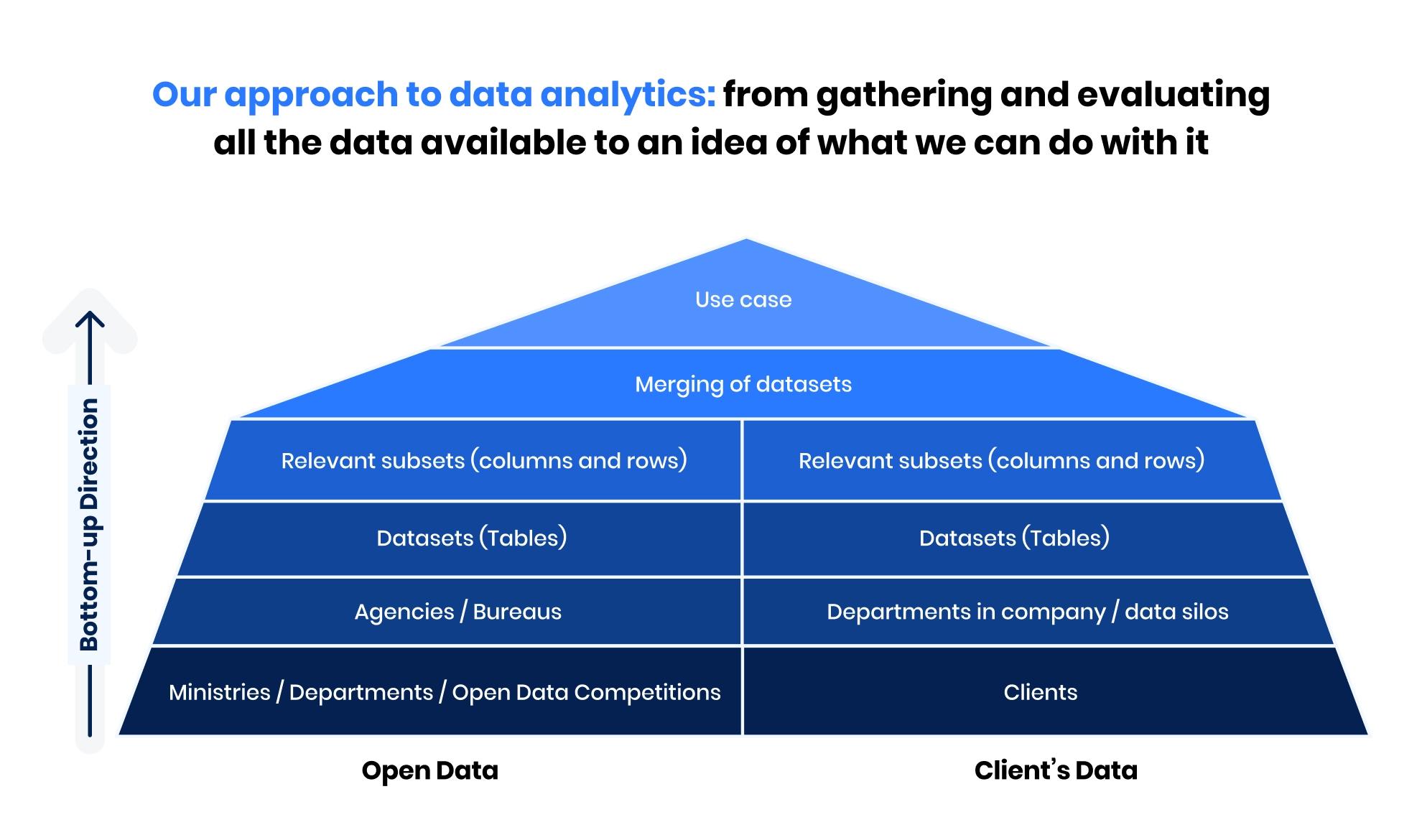
Working closely with the client's team, our specialists conducted profound research to identify which data could be leveraged, pinpointing early on the challenge of limited accessible data. Along with that, as there was not a holistic picture of the target goal of the solution, we decided to use a so-called bottom-up approach to discover use cases.
This means we have systematically gathered all data we have or could have in order to come up with something that might involve both the client's data and open data or their intersection. The main goal was to understand what kind of data we have and how to make the most of it.
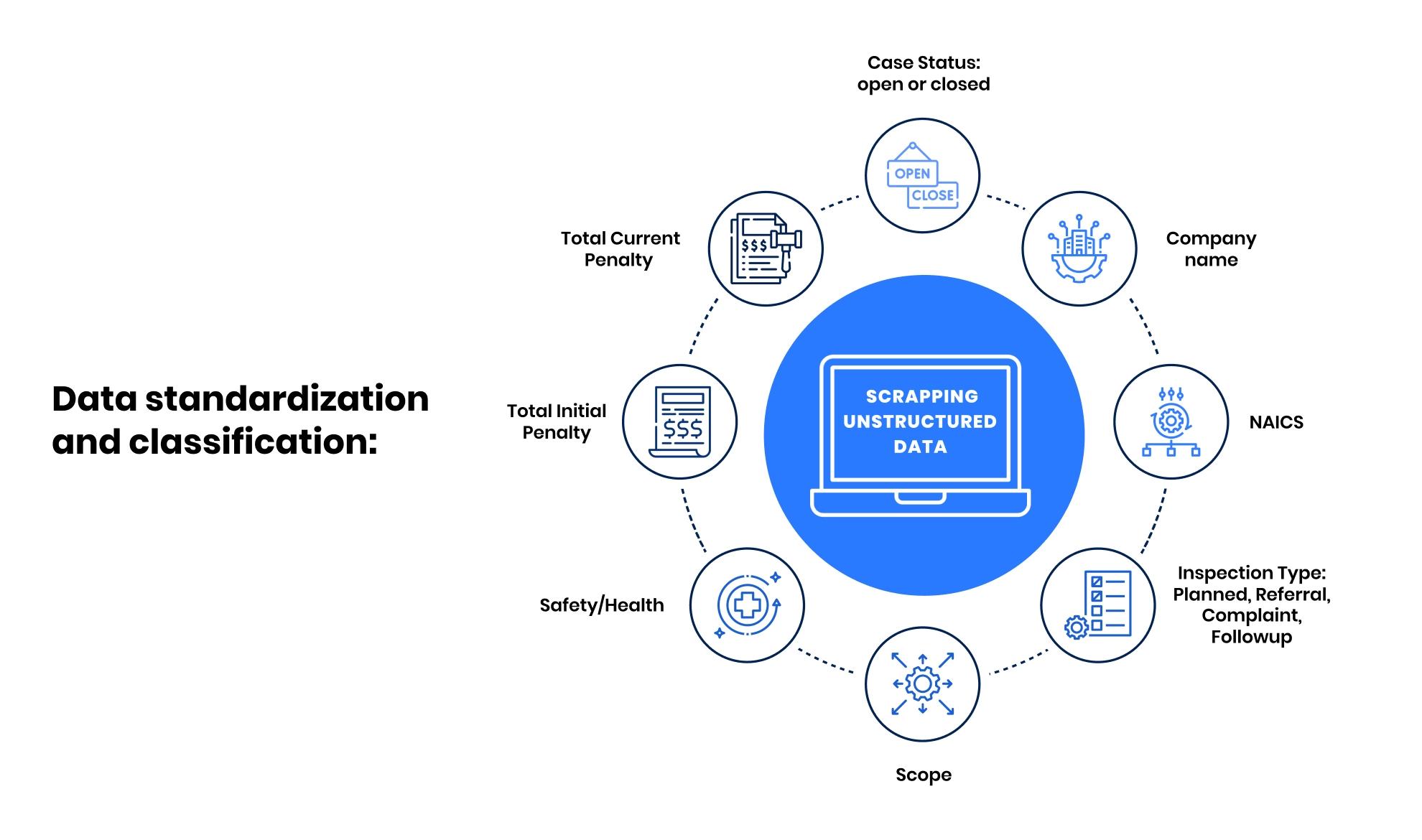
Thus, we derived valuable insights from the available data and integrated external sources like OSHA and Bureau of Labor Statistics (BLS) databases to enhance the information scope.
As the project progressed, we incorporated backend engineers to develop the application framework while the client's team worked on the solution's front-end.
Regular sync-ups, facilitated by our tech lead, who also overviewed the code and managed some DevOps parts of the process, ensured alignment on evolving project goals, and clarified technical roadblocks.
Initial prototypes were shared and analyzed by stakeholders, who then integrated these insights into presentations to communicate value to their clients. Based on the feedback we received, our team could deliver a successful proof-of-concept, transition into an MVP phase, and now move toward full-scale production.