


Healthcare services in 2026 face many challenges that are difficult to solve with traditional methods. The high burden on healthcare systems because of the high rate of admission, lack of transparency, poor patient satisfaction, and poor monitoring of health outcomes are some of the current issues to improve.
Remote patient monitoring software is one of the ways to reduce the burden on healthcare systems and improve outcomes.
The market of RPM solutions is set to grow at 32.8% CAGR between 2022 to 2030 (Source ). This article offers an overview of top remote patient monitoring companies and looks into the factors that make RPM solutions work for all stakeholders.
Top 6 remote patient monitoring companies & solutions
With the continued development of the RPM sector, new RPM companies emerge all the time. While keeping track of all developments in this ever-growing sector is exciting, there comes a moment to select the platform that works for you.
Here is the list of health monitoring companies and their accompanying remote patient monitoring platforms that either occupy a significant market share, offer an out-of-box solution, or occupy a niche of its own.
1. Medtronic CareLink
Medtronic CareLink is a remote patient monitoring software that observes patients with implanted cardiac devices. The remote cardiac monitoring app can transmit data from implantable cardiac devices (ICDs), cardiac resynchronization therapy defibrillators (CRT-Ds), and pacemakers.

Medtronic is an American medical device company with operational headquarters in Minneapolis, Minnesota, and legal headquarters in Dublin, Ireland. Besides Medtronic CareLink, the company offers remote patient monitoring solutions, including remote monitoring solutions for continuous glucose monitoring.
Benefits of Medtronic compared to competitors include interoperability with the wide range of Medtronic devices (Source ). It is one of the few RPM companies that work with implantable devices, not just for non-invasive monitoring. Medtronic's platform offers very detailed data about patient-triggered episodes.
What is also significant is that Medtronic has a well-established reputation as a manufacturer of electronic medical devices. The well-known quality of its devices creates a reputation for the company's remote patient monitoring platforms. Finally, RPM solutions for patients with heart conditions, such as heart failure, are supported by research and other treatments (Source ).
2. PatientConnect by Health Recovery Solutions (HRS)
HRS is a Hoboken, New Jersey-based company founded in 2006 primarily specializing in remote patient monitoring and telehealth. PatientConnect Complete is a flagship remote patient monitoring software with Bluetooth-enabled biometric monitoring devices, such as a blood pressure cuff, pulse oximeter, and scale. PatientConnect Complete provides home health monitoring and chronic care management (Source ).
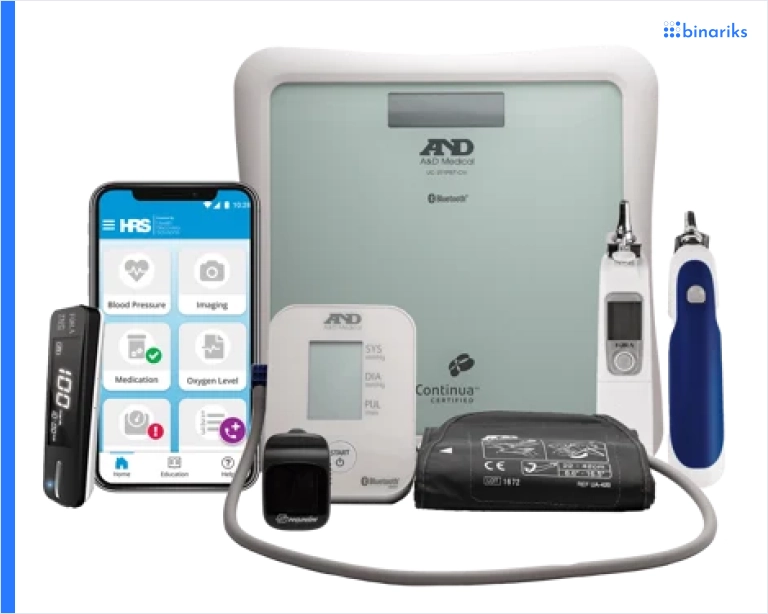
Various factors make HRS one of the best remote patient monitoring companies. First, PatientConnect aims at various chronic conditions, including cardiac conditions, respiratory diseases, COPD, and hypertension. Second, the platform can integrate with various biometric devices, allowing for versatile data collection.
Even more striking is that PatientConnect is part of a broader range of telehealth solutions, including PatientConnect Mobile providing patients with information about disease management, and PatientConnect Core, for direct communication with the medical team or caregivers.
Therefore, HRS allows full-scale remote health monitoring beyond just remote monitoring solutions. Finally, HRS offers reimbursement support to its patients, offering necessary information and resources.
3. The eCareCoordinator Clinical by Philips Healthcare
eCareCoordinator Clinical is a dashboard for clinicians and an accompanying application for patients. The dashboard and the app have integrated AI that analyzes trends based on received data. The platform assists with home patient monitoring of individuals with heart failure, COPD (chronic obstructive pulmonary disease), and diabetes.

Philips Healthcare is a branch of multinational conglomerate corporation Philips. Aside from RPM solutions, it also offers sleep apnea devices, computed tomography machines, cardiographs, other medical equipment, emergency healthcare solutions, and other offerings related to the healthcare industry.
One of the obvious benefits of eCareCoordinator Clinical is its risk stratification capacity built on its AI algorithms. The software can risk-stratify patients based on their data. This helps identify patients at higher risk of adverse events or hospitalization and may need more immediate or intensive care.
Another benefit of eCareCoordinator Clinical is the seamless integration between the patient app and the clinician dashboard. The eCareCoordinator offers an intuitive dashboard that presents real-time patient data. This allows clinicians to monitor patient status and proactively intervene if necessary.
Though a subjective factor, reputation also matters – Philips is one of the longest-standing remote patient monitoring companies on the market, with a global presence, brand trust, and the potential for continuous innovation. Philips Healthcare offers a wide range of healthcare solutions and devices. This allows seamless integration between various company products for better performance.
4. Masimo SafetyNet by Masimo
Masimo SafetyNet is one of the few remote patient monitoring solutions designed to aid COVID-19 response efforts. This RPM solution uses a wearable pulse oximetry sensor to track a patient's oxygen saturation, pulse rate, and respiration rate. The application uses alerts and patient-reported data to track changes that require medical intervention and hospitalization.
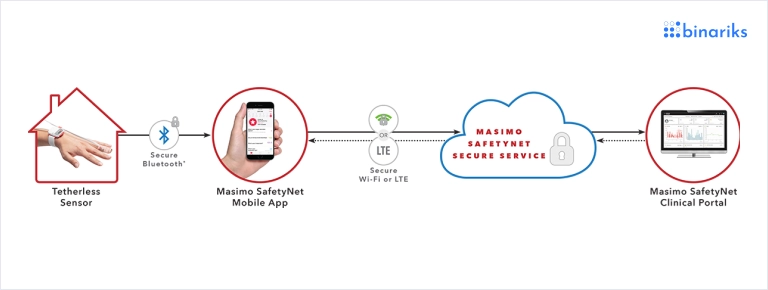
Masimo is a global medical technology company that develops and manufactures innovative non-invasive patient monitoring technologies and medical devices. Founded in 1989, the company is headquartered in Irvine, California.
Aside from remote patient monitoring solutions, it is primarily known for pulse oximetry technology and the technology that monitors the state of the brain under anesthesia.
Masimo SafetyNet exemplifies how well remote patient monitoring vendors can respond to growing demand in a particular niche in extraordinary circumstances. During the COVID-19 pandemic, there have been significant challenges with the burden on the healthcare system and with monitoring individual cases to ensure that the condition does not worsen to a critical stage over several days. Masimo SafetyNet offered a prompt and effective response to these challenges.
Even though the application was initially launched to help healthcare systems manage the surge of patients during the COVID-19 pandemic, its usage has expanded to other patient populations and conditions. This is a testament to this technology's scalability.
Another benefit of Masimo is its use of disposable sensors or reusable devices. These sensors have a user-friendly design that does not cause discomfort or interfere with daily activities. After the treatment, it can be disposed of, which is convenient for acute conditions like COVID-19.
5. G6 by Dexcom
Dexcom G6 is a continuous glucose monitoring (CGM) system that consists of a sensor, a transmitter, and a display device. Dexcom is a company from San Diego, California. It is one of the remote monitoring companies known exclusively for manufacturing and distributing glucose monitoring devices.
Dexcom G6 allows the patient to share the data about their blood glucose levels with ten people. What makes it different from other applications is that this list includes not just the medical team, but also family and loved ones. This allows for condition management beyond the clinical setting.
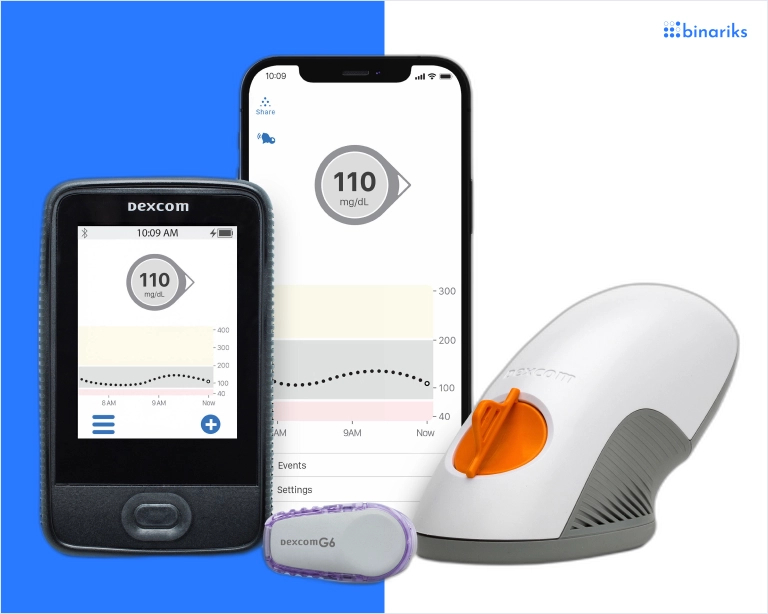
The setup of G6 consists of a wearable sensor applied just under the skin and measures glucose levels in interstitial fluid every 5 minutes. The sensor is non-invasive, allowing a comfortable experience. It also lasts approximately ten days, longer than many other CGM devices.
The accompanying Dexcom G6 application is available on Appstore and Google Play and can be installed on any supporting laptop, smartphone, or smart device. The software can identify trends, send alerts, and provide patients with data visualizations.
6. CareVive
CareVive is a Boston-based company with a focus on solutions for oncology treatments. It is one of the few remote monitoring companies that cater to cancer patients.
The cancer segment of RPM services is still underdeveloped as of 2026 because the physiological parameters commonly monitored by RPM devices, such as heart rate or blood glucose levels, do not directly reflect the status of a cancer condition.
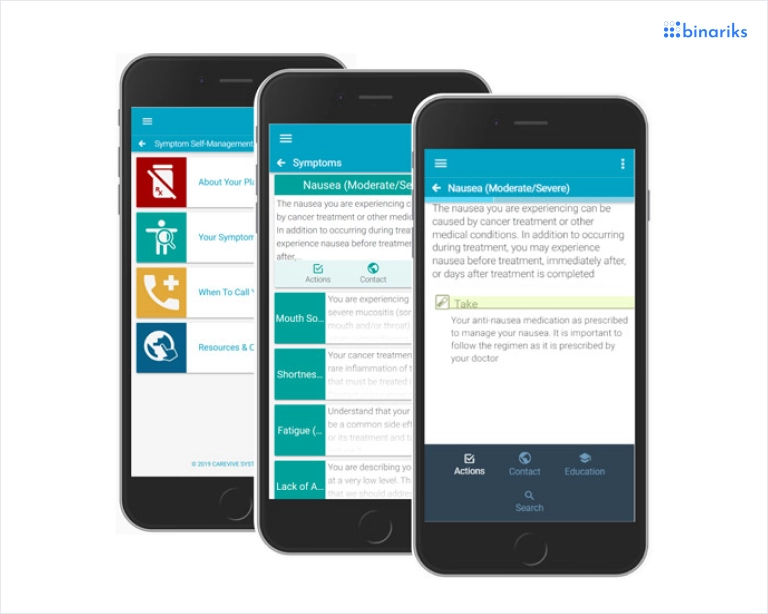
CareVive primarily offers a software solution that allows patients to input their data, typically relating to symptoms and side effects of their cancer treatment. This constitutes the term patient-reported outcomes (PROs). Care teams can then monitor these reported outcomes remotely, which constitutes a form of RPM.
With CareVive, patients input their symptoms and experiences into the app through their preferred devices. The platform then analyzes the data, identifying patterns, trends, and areas of improvement.
The care team reviews the data collected by the application and adjusts the treatment plan according to analysis. This remote patient monitoring solution makes sense in the context of cancer treatment, as comfort management is a big part of cancer treatment.
CareVive stands out because it is one of the few remote monitoring systems in the emerging RPM cancer market segment. Though CareVive is not a classic RPM model, as it does not use devices, it has all the other benefits of remote monitoring solutions, including data analysis and healthcare team access.
How to pick the best RPM solution
Picking the best RPM solution is the combination of objective factors and subjective demands for treatment. Here are the factors that one should take into consideration when picking up the best possible RPM solution:
- Specific patient needs: This is, by far, the most critical factor when choosing remote patient monitoring vendors. The application should monitor the particular symptoms and coordinate with the health professionals in a way that is helpful to the patient.
- Integration with devices and other apps: The application is supposed to be integrated with other devices and apps necessary for the treatment in a seamless way. Another significant factor is the integration with EHRs.
- Data Accuracy and regulatory compliance: The algorithms used in the application should produce accurate data, and the app should comply with necessary regulations, such as HIPAA.
- Scalability: This is the most critical factor for remote patient monitoring companies and healthcare providers. The system is supposed to scale as the customer base grows or changes are required. For example, Masimo SafetyNet once the demand linked to Covid-19 shifted.
- Cost and accessibility: The application should be available and accessible. Reimbursement possibilities are also a plus.
- Usability and patient engagement: The app should be designed user-friendly and have features that ensure that everyone involved can easily use it. For patients, this also means having educational content and communication tools.
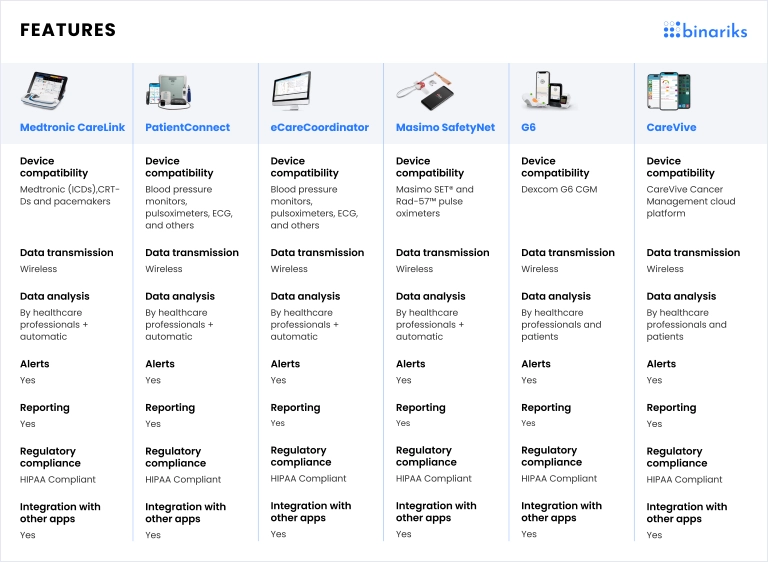
For practical illustration, here is the comparison of all platforms described in this article:
Why you should choose a custom RPM solution
When a healthcare organization is looking for RPM solutions, the offers from top remote patient monitoring companies might only sometimes be the best choice because of customization requirements. There are many benefits to custom RPM solutions that are worth considering if your organization is struggling to find the right fit.
A custom RPM solution can integrate with the broad range of devices beyond the specific device tied to specific health monitoring companies. The custom solution allows you to integrate with your existing systems, support the devices you already use, and offer features particularly relevant to your patient population.
With a custom solution, you can also opt for scalability, add unique features, or design something unique that will help you gain a competitive advantage. Binariks can help you develop custom RPM solutions.
We have a proven track record of creating interoperable healthcare solutions. Binariks specialists have deep knowledge of HIPAA standards and offer full-cycle development with the potential to create scalable solutions.
Final thoughts
Healthcare professionals and patients are only beginning to unleash the potential of remote patient monitoring software. However, in 2026, it has already proven to be a promising solution for reducing the burden on healthcare and improving health outcomes and patient satisfaction.
The track record of top remote patient monitoring companies demonstrates the success of RPM solutions in aiding the treatment of cardiovascular conditions and diabetes. For other conditions, like cancers and sleep disorders, the full potential will be realized as new companies emerge and bring new solutions.
Aside from technologies, the future of RPM depends on the collaboration between the patients and healthcare providers to work on solutions that work best for everyone. If you are a healthcare organization considering implementing an RPM solution in 2026, now is the right time to begin.