


Wouldn’t we all like to live in a world where all bills are paid on time? Yes, but we keep missing deadlines, lose bills and names, can’t always keep up with the regulations, and so on and so forth. Maybe we should hire more people to do it right? Unfortunately, the more people participate in the process, the more human errors there can be. Don’t get discouraged. You can still implement P2P automation software. How is it going to help? P2P automation brings efficiency, transparency, compliance, and risk management.
Our fintech software development experts kindly offered their insights into P2P automation. Keep reading and learn how to automate P2P process, what benefits of P2P automation there are, and what barriers to procure-to-pay automation you may face.
What problems can P2P automation in business resolve?
The piling number of micro steps in the P2P process may seem daunting. And the bigger the paper mountain of unprocessed bills and contracts gets, the larger the penalties grow. So if you find your company in any of the following situations, you should consider automating your P2P process.
- Your company receives ununified bills through multiple channels
- There’s no document standardization in your system
- P2P processes are stretched in time and impact the work dynamics
- You manually complete every task and can’t be certain when exactly the bills will be paid
- You find it hard to control all processes and results because there’s no transparency in your system
- Even after you’ve thoroughly checked the payments with the counterparty, you later encounter mistakes and wrong dates in your documents
- Some of your payments have a long list of requirements between two banks and have to consider the regulatory acts
Procurement directors and CFOs of multiple businesses, big and small, face the same issues. Some larger companies try and fix the issues by implementing procure-to-pay automation solutions like SAP and Ariba while the smaller ones choose partial P2P automation. Be it full of partial P2P process automation, companies reach impressive ROIs.
And what ROI does procure to pay process automation bring?
Total Economic Impact – a study by Basware and Forrester Consulting estimated the potential ROI businesses could receive by implementing P2P automation software. Here are the key findings:
- P2P automation can decrease annual spending by $2.7m
- Procurement teams can generate $680,000 by streamlining the accounts payable process
- P2P automation helps businesses cut invoice processing times and generate $260,000 in early pay discounts
- Firms that implement P2P automation software that runs on cloud save around $157,000
What P2P processes can you automate?
You can apply the procure to pay process automation to process orders, invoices, supplier management, and to generate spend analysis. Here’s what exactly P2P cycle automation software can cover:
- Order and requisition processing will help you streamline the procurement process
- Invoice processing will significantly reduce the time spent on manual data entry, improve accuracy, and accelerate invoice processing
- Payment processing will reduce the time spent on processing payments for suppliers and, hence, reduce the payment cycle and skyrocket supplier satisfaction
- Spend analysis automation that will help you gain insights into patterns of procurement spending and find opportunities for cost saving
- Automated approval workflows reduce the time required to approve procurement transactions
- Automated supplier management processes will increase the consistency and accuracy of supplier information, reduce the risk of human errors and improve supplier relationships
With all that data in the palm of your hand, you gain transparency. You can generate reports and analyze the weak spots by yourself. And, what’s really important, you will get some useful reminders and notifications to meet the deadlines and save your company from unnecessary expenses.
How to provide P2P automation in your business?
Did we inspire you to transform your P2P processes yet? Great! There are a couple of ways you can follow. The first and most straightforward is to implement an off-the-shelf solution. Yet, be aware that they pose risks:
- You’re not the code owner so you may lose some functions if the owners decide to drop them during another update
- You’ll have to change and standardize all your P2P processes according to the solution flow which might be quite rigid
- It might be complicated to scale the capacity of the solution while you’re facing rapid growth
You can also make your own procure-to-pay automation solution. That’s exactly what we at Binariks do. Here are our recommendations for P2P process automation software development.
- Assess the “as-is” state: Find the processes that can/should be automated and which ones can only be carried out with manual intervention
- Find a tech company with expertise in fintech software engineering or hire developers and manage their workload by yourself
- Communicate your need to the tech company; participate in discussions, listen to daily stand-up progress meetings, and get a custom P2P cycle automation application.
- Configure the system workflows, give user permissions, and fill in all the gaps.
- Educate your employees. Show them how the procure to pay process automation solution works and what’s it capable of.
What problems can arise when automating P2P
There might be some barriers to procure-to-pay automation like unwillingness to adopt technologies in your organization. It’s quite important to prepare and educate your people before you implement P2P automation software of your choice. There, however, may be more costly issues including
- Issues with invoice processing
When done manually, entries, sign-offs, and processing can significantly slow down the P2P cycle. The issues snowball into late payment penalties, the high turnaround time for invoice approvals, and worsened supplier relationships. And it’s no secret that systems that require human and paper data entry are bound to generate errors.
- Barriers to complying with policies and governance
It may be quite challenging to manage numerous purchasing channels during some P2P processes. For instance, such basic process as expenditure pre-approval can be totally disregarded as “unnecessary” and result in improvised purchases and non-contracted spending.
- Unifying systems and processes
Every department within a business has its own purchasing procedures and technologies. Such a variety of tools obstructs expenditure visibility, which eventually leads to overspending. The procurement process is no longer transparent since there is no clear visibility into who is spending on what.
Companies also typically store data in different physical places, making it impossible to have a dependable, single, integrated supplier and business data source. It complicates data retrieving, particularly during audits.
What’s more, teams that don’t closely cooperate with other departments tend to create data siloes. Because there is no data exchange, the process becomes inefficient and costs businesses a lot of money.
- Supplier management
Shortlisting vendors in a human-led onboarding procedure might be difficult, especially when you haven’t got enough information. On top of that, buyers lack the strategic vision needed to implement new vendor management systems for multi-product and high-volume purchases.
Organizations frequently harm their relationships with profitable suppliers by failing to respond to payment queries on time. Payments are delayed in approval procedures without a suitable tracking and feedback system, and suppliers move on to the next buyer, spending a significant amount of money.
Which businesses should think about P2P automation?
Businesses that encounter issues such as long invoice processing time, high human effort, poor supplier satisfaction, and difficulty tracking and monitoring expenditure may think about automating their P2P process to boost efficiency, cut expenses, and improve supplier relationships.
As of now, procure to pay process automation is largely adopted in a bunch of industries:
- Manufacturing and production companies
- Retail and e-commerce businesses
- Healthcare organizations
- Construction and engineering firms
- Government agencies
- Financial and insurance companies
- Technology and software businesses
- Service-based industries such as consulting, marketing, and legal firms
Real-life cases of P2P automation
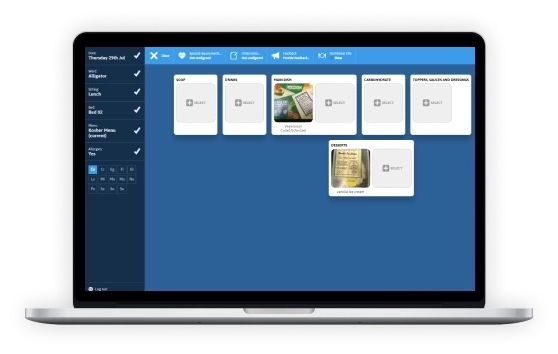
Binariks engineered P2P automation platform for a hotel chain in the UK
We have refactored, modernized, and expanded the functionality of a high-class procure-to-pay automation business solution. Our team of engineers with expertise in P2P automation helped refactor code from Angular.js to Angular 9. The change helped unleash wider business opportunities, better automation, visibility, and integration with other ecosystems.
P2P automation for a pharmaceutical company
A pharmaceutical company Alimera Sciences implemented an automated Accounts Payable solution by DocuPhase . Before the implementation of the P2P automation software, the company was suffering from two large issues:
- the previous platform has limited licenses which drowned the productivity
- the workflow for processing invoices was inefficient
As a result, the company introduced more transparency and visibility into the P2P cycle and reduced invoice processing time by 93%.
Final thoughts
It’s no use hiring more people to run your P2P processes faster or with more efficiency. On contrary, the more people are responsible for running already complicated processes, the more human error there will be.
P2P automation holds the key to streamlined, compliant, and effortless processes. Planning to implement P2P automation software in your business? We can help! Leave your information and we will come back to you.